The expensive part of feeding a family is rarely the groceries. It is 5:40 on a Tuesday, everyone is hungry, nothing is planned, and the delivery app is right there. Meal prep, done in a low-key way that does not take over your weekend, exists to beat that exact moment. This guide covers the math, the method, and the handful of cheap staples that make it work, without pretending you need matching glass containers or a color-coded spreadsheet.
Know the number you are aiming at
It helps to have a benchmark. The USDA publishes monthly cost of food reports at four spending levels, and the lowest tier, the Thrifty Food Plan, prices out a family of four at roughly $1,000 a month in its 2026 reports, or somewhere around $230 a week. That number assumes nearly everything is cooked at home. If your grocery spending sits well above the moderate tier and you are still ordering takeout twice a week, the gap is your opportunity, and prep is how you close it without feeling deprived.
Prep components, not complete meals
The classic mistake is cooking five identical boxed lunches on Sunday, then dreading them by Wednesday. Families do better with component prep: cook a few flexible building blocks, then assemble different dinners in ten minutes each night.
- One big batch of a base. A pot of rice, a tray of roasted potatoes, or a pound of cooked pasta covers three dinners as the starchy floor of the meal.
- Two proteins, cooked plain. Season them at assembly time instead. Plain shredded chicken becomes tacos on Monday and fried rice on Wednesday without tasting like a rerun.
- One sauce or flavor kit. A jar of quick salsa, a peanut sauce, or a batch of vinaigrette is what makes the same ingredients feel like different food.
- Washed, cut vegetables. Not because chopping is hard, and simply because a bag of already-cut peppers gets used while a whole pepper gets composted.
The cheap protein bench
Protein is where grocery budgets go to die, so this is where prep pays hardest. As of mid-2026, in most US supermarkets, a few options reliably land near or under two dollars a serving:
- Chicken thighs. Frequently the cheapest meat per usable pound, often well under $3 a pound on sale. They also survive reheating far better than breasts, which matters for prep.
- Eggs. Prices have bounced around in recent years, but even at $3 to $4 a dozen, a two-egg serving stays cheap. A dozen boiled on Sunday covers breakfasts and lunch add-ons all week.
- Dried beans and lentils. Around $1.50 to $2 a pound dry, and a pound cooks up to roughly six cups. Lentils need no soaking and cook in about half an hour, which makes them the gateway legume for busy people.
- Ground turkey or pork on sale. Buy two or three pounds when the price drops, brown it all at once, and freeze half already cooked.
Canned beans and frozen vegetables deserve a word of defense here. They cost more than dried and fresh per unit, but they cost far less than the takeout you order when the dried beans never got soaked. Convenience that keeps you cooking at home is a bargain.
A 90-minute Sunday that covers the week
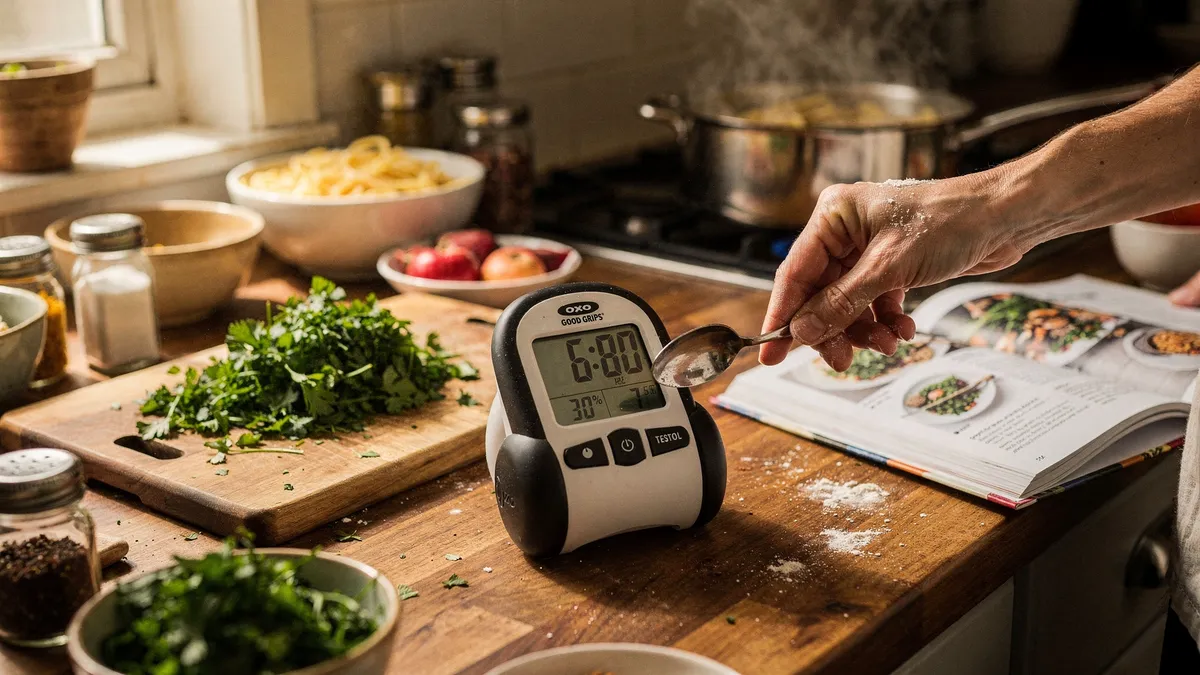
You do not need a full prep day. Ninety minutes, run in parallel, is enough:
- Start a big pot of rice or a tray of potatoes. Hands-off from here.
- Get chicken thighs roasting on a sheet pan, salt and pepper only.
- While those cook, simmer a pot of lentils or a simple chili on the stovetop.
- Boil eggs in the last twenty minutes and whisk together one sauce.
- Chop whatever vegetables you bought, and pack everything in clear containers at eye level in the fridge.
That yield, roughly speaking, is three fast dinners, four or five packable lunches, and breakfasts. The freezer handles the rest of the week: whenever you make chili, soup, or pasta sauce, double it and freeze the second half flat in zipper bags. Flat bags stack like books, thaw quickly, and turn a future bad Tuesday into a fifteen-minute dinner you already paid for.
The only equipment worth buying
Meal prep marketing wants to sell you a system. You need three things, and you may own them already. A 6-quart slow cooker handles beans, shredded chicken, and soups while you are at work; a basic Crock-Pot runs around $50 as of mid-2026 and lasts a decade. A simple rice cooker removes the one task people reliably burn; an Aroma 6-cup model costs about $30, and the fancy Zojirushi upgrade is lovely but changes nothing about the rice's cost per serving. And a stack of 32-ounce deli containers, the kind restaurants use, costs under $20 for a dozen, survives the dishwasher, and lets you see the food you prepped, which is the entire battle. Food you cannot see is food you will not eat.
Where to find recipes that respect your budget
Most recipe sites ignore cost entirely. Budget Bytes is the exception worth bookmarking: recipes are priced out per serving, the ingredients are normal supermarket items, and the archive leans hard on exactly the components this guide describes. Pick two new recipes a month, keep the winners, and your rotation builds itself.
A sample week, honestly costed
Here is what the system looks like in practice, using the Sunday session above plus one midweek top-up shop for produce and milk:
- Monday: chicken tacos with quick salsa and whatever vegetables need using first.
- Tuesday: lentil chili from Sunday's pot, cornbread if anyone has the energy.
- Wednesday: fried rice with the second chicken portion, frozen peas, and boiled eggs.
- Thursday: freezer night, whatever flat bag is oldest.
- Friday: intentional fun night. Homemade pizza or smash burgers cost a fraction of delivery and keep the week from feeling like a punishment.
Families running a version of this reliably land near the USDA's thrifty and low-cost tiers without coupon heroics. The savings come from one place: the nights you would have ordered out and did not.
What to skip
Skip the 30-piece container sets, the vacuum sealers, and any plan that requires cooking for four hours on your day off. Skip perfection too. A week where you prepped one protein and one pot of rice is still a week with three cheap dinners in it. The goal is a fridge that answers the 5:40 question before the app does.