Portable Pet Water Bottles for Walks: here's what actually helps. As the temperatures rise, remember to keep your furry friends cool and hydrated! While some pet owners may be tempted to share their own water bottle with their dog during walks or hikes, there are better options out there.
Why Portable Pet Water Bottles Matter
These specially designed water bottles can help deliver a refreshing drink without attracting debris or germs. And some are even insulated and come in fun colors. So whether you're looking to keep a leash partner hydrated on a long summer walk or have easy access to water during a storm, there's a water bottle out there for you and your pet.
On average, dogs need about one ounce of water per pound of body weight each day. And July is National Pet Hydration Awareness Month - what better time to learn how to keep your pet hydrated? During hot weather - pets naturally lose more fluids through panting and activity, making hydration especially important. When traveling or spending time outside, bringing portable water bowls or pet-safe travel bottles makes hydration easier to manage.
Features to Look For in Portable Pet Water Bottles for Walks
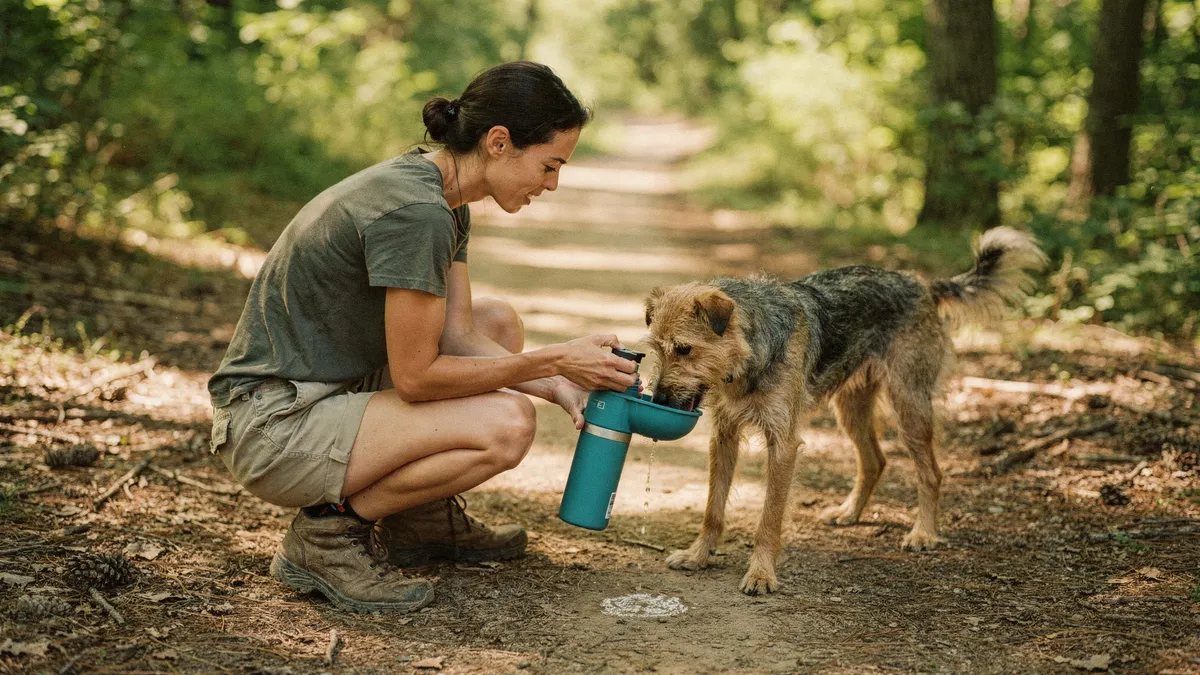
If you're planning outdoor activities with your pet, bring along a portable water bowl and a bottle of water. Look for water bottles with spouts that allow you to pour out just a little bit or a lot, depending on how thirsty your pet is. Some water bottles also let you return unused water back into the bottle so you can offer hydration as often as needed without waste. You might also consider an insulated bottle to keep your dog's water cool on hot days.
In addition to design - consider the size of the water bottle you want, including how much water you want to be able to fit inside. The typical rule of thumb is to carry eight ounces of water per dog for every hour spent hiking. For one dog, a 16-ounce water bottle is a good starting point if you're planning on hiking for 1-2 hours.
Collapsible and light-weight bowls can attach right to the water bottle. Choose a bowl that will easily fold up and fit into a backpack or pocket. And look for one that's dishwasher safe and BPA-free for easy cleaning.
What to Consider Before Buying a Pet Water Bottle
There are lots of factors to consider before buying the perfect water bottle. Consider how much water your pet needs and how much you want to carry on your walks. Consider the size and weight of the bottle itself. Choose a water bottle that attaches easily to your leash or slips comfortably into a pack.
Consider investing in a pet-safe water bottle that's BPA-free and top quality. These materials will ensure that the water inside is fresh and safe for your pet to drink. Many pet water bottles are made of stainless steel, which is durable and corrosion-resistant.
Many pet water bottles are designed with bright, fun colors and prints - think polka dots and stripes! Consider buying a water bottle that coordinates with your pup's leash or collar. You might even consider getting multiple water bottles in different colors and sizes for different needs or activities.
How to Keep Your Pet Hydrated at Home
It's just as important to keep your pet hydrated at home as when you're out and about. Consider refilling and cleaning your pet's water bowl throughout the day to encourage drinking. You might also consider raising the bowl off the floor to decrease strain on the neck while eating and drinking.
Some pet owners enjoy giving their dogs ice cubes or freezing treats in the summer for a fun - hydrating snack. Consult with your veterinarian for more ways to keep pets hydrated. Certain medical conditions can affect how much fluid a pet should have, and your veterinarian can help you monitor your pet's water intake and health.
Other Tips for Pet Hydration
Human bodies are about 60% water, while a pet's body is 80% water! That's why it's so important to keep your cat or dog hydrated. Both cats and dogs, on average, need about one ounce of water per pound of their body weight daily. In the United States - pet food is among the most highly regulated of all food products and must meet both federal and state regulations.
Pet treats and chews are held to the same standards as human foods. The U.S. Food and Drug Administration (FDA) also regulates both finished pet foods and their ingredients to help ensure that they're safe for animals to eat and properly labeled. Some pet foods and treats contain added vitamins, minerals, and other nutrients that can help supplement an animal's diet.
Pet owners can find useful information on FDA's website and can report problems they observe with their pets to their veterinarian and the FDA. You can also contact the FDA's Consumer Complaint Coordinators with questions or concerns.