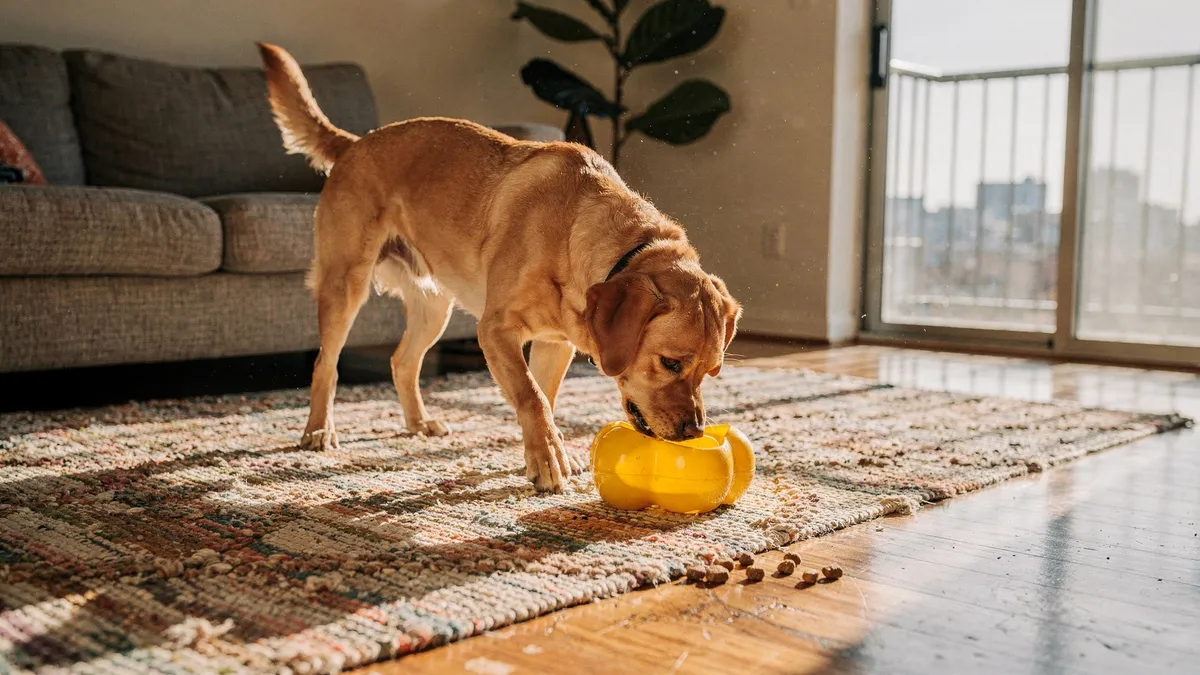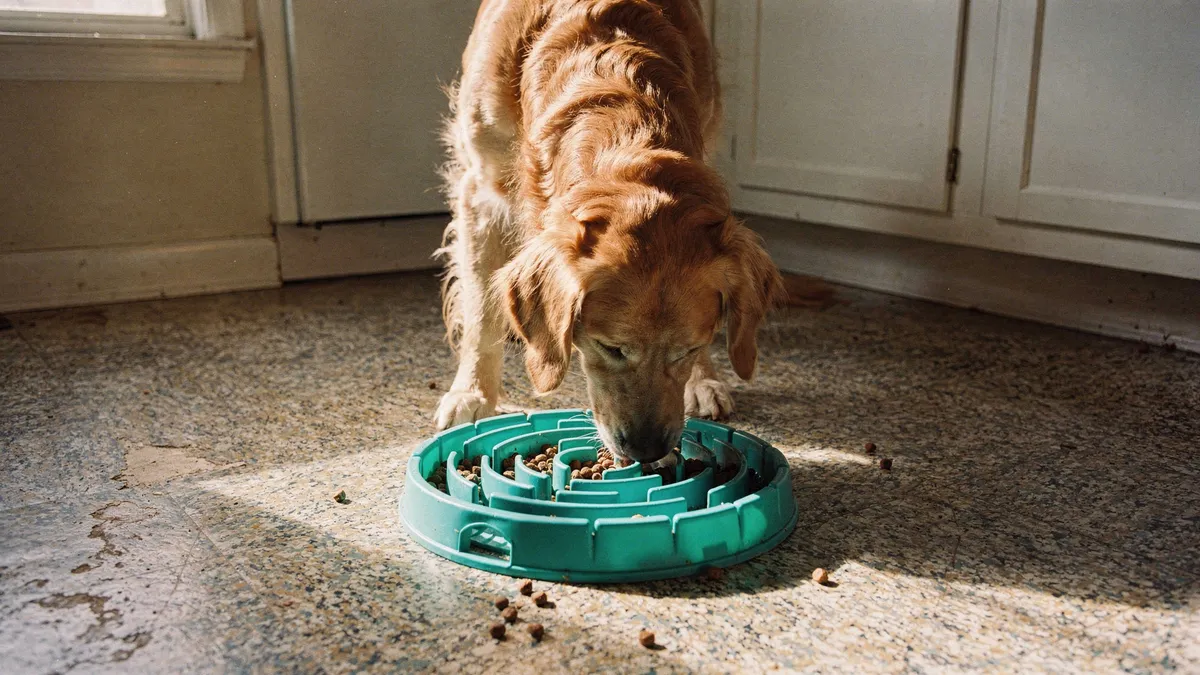
Slow Feeder Bowls for Fast Eating Dogs: here's what actually helps. If you've ever wished your dog would slow down at meal times, you might want to consider a slow feeder bowl. Also called puzzle bowls, these products have lifted ridges that force dogs to push kibble around as they eat.
What Are Slow Feeder Bowls and Why Do Dogs Need Them
While formulated to help dogs gain weight, some high-calorie diets are so delicious that dogs scarf them down incredibly fast. This speedy eating can lead to problems like bloat, a potentially life-threatening condition. Slow-feeder dog bowls can extend mealtime from seconds to several minutes - giving at-risk dogs time to chew and swallow their food safely.
Large, deep-chested dogs such as great danes, German shepherds, standard poodles, and Saint Bernards are most at risk for gastric dilatation volvulus (GDV) - or "bloat," and may especially benefit from the slower eating encouraged by these bowls. The number of dogs diagnosed with GDV each year in the US is unknown, but estimates range from the tens of thousands up to 60,000 cases per year. The breed with the highest average lifetime likelihood of a bloat episode is the Great Dane, at 42.4%.
What's Bloat and How Can Slow Feeder Bowls Help
GDV occurs when the stomach distends with air - fluid, or food (dilatation, also known as "bloat") and then twists (volvulus), preventing normal stomach emptying and trapping gas. Findings from Purdue University found that the risk of bloat increased 20% per each year of age. Dr. Larry Glickman, an epidemiologist at Purdue University - began a controlled study on canine bloat in 1994, following 1,914 dogs.
Dogs that eat quickly have a 15 percent higher risk of developing bloat. Raised (off the ground) and wide, shallow bowls encourage faster eating. As a result, some slow-feeder bowls are lifted to make it easier for large dogs to access their food - but feature internal ridges and walls that force slower eating.
Best Slow Feeder Bowls for Dogs
The best slow feeder bowls combine ease of cleaning with features that significantly slow down eating without being so complex that they frustrate dogs. Here are three top-rated options to consider.
- PawsPik Stainless Slow Feeder: This stainless steel option is durable and easy to clean. The lifted, circular design keeps mess contained while raised ridges slow down eating. Though small, the ridges are wide enough that most kibble should fall easily out. PawsPik Stainless Slow Feeders come in two sizes and are rated 4.5 out of 5 stars with 89 reviews.
- Outward Hound Fun Feeder: Made in the USA, this colorful interactive bowl combines slow-feeding technology with an interactive element. Dogs can easily scoop kibble out with their snouts, but the rubber "claw" design keeps food contained. Though it can be difficult to fill and clean - owners say their dogs love it. Outward Hound Fun Feeders come in two sizes and are rated 4.6 out of 5 stars with 4.8K reviews.
- PawsPik Lynx Ceramic Raised Slow Feeder: Another lifted bowl, the PawsPik Lynx combines a raised design to aid large dogs with multiple inner bowls that slow eating. Ceramic, the design is dishwasher safe for easy cleaning. PawsPik Lynx Ceramic Raised Slow Feeders come in two sizes and are rated 4.6 out of 5 stars with 273 reviews.
Risk Factors for Bloat and When to See a Vet
You should always contact your vet if you suspect your dog is experiencing bloat or any emergency medical condition. Risk factors for GDV include:
- Eating too quickly
- Feeding once daily or a large volume of food per meal
- Using a raised food bowl
- Traits passed through generations of breeding
- Having a first-degree relative with a history of GDV
- Being a large breed dog with a deep chest and small waist
- Stress, anxiety, or fear
- Recent veterinary surgery
- Recent boarding or dog kenneling
- Having a happy personality
The survival rate for GDV with medical and surgical intervention is greater than 80 percent. If you think your dog may be at risk for GDV - talk to your veterinarian about a prophylactic (preventative) gastropexy, which can be performed during neutering or spaying surgery. The success rate of preventing the recurrence of a GDV with a gastropexy is 95%.
References
- dog bowls can extend mealtime - chewy.com
- 60,000 - vmccny.com
- 42.4 - vin.com
- when the stomach distends with - vet.cornell.edu
Further reading
- https://pmc.ncbi.nlm.nih.gov/articles/PMC8986020/
- https://www.vet.cornell.edu/departments-centers-and-institutes/riney-canine-health-center/canine-health-topics/gastric-dilatation-volvulus-gdv-or-bloat
- https://superfeedy.com/blogs/news/best-slow-feeder-dog-bowls-for-fast-eaters-2025-reviews-tested?srsltid=AU7gw4VOq5JUuu6-JXgtEUhKj004vpBe9fmpfohoe17jXwHo5g7q9I81
- https://www.oregonvma.org/care-health/companion-animals/health-safety/bloat-dog-owners-watch-for-symptoms
Disclaimer
This article is a personal reflection shared for general informational purposes only. It is not medical or health advice, and it is not a substitute for care from a qualified professional. Please talk to your doctor about your own health.