Gary sat in the waiting room of a suburban repair shop last February, nursing a cup of coffee that tasted like burnt rubber and despair. He was looking at an estimate for a head gasket failure that effectively wiped out his entire summer vacation fund. That’s a $4,000 bill right there, and it’s enough to make anyone rethink their life choices. Learning how to maintain your car to avoid expensive repairs keeps your savings intact and stops that specific kind of financial stress before it starts. Most people treat their car like an appliance that works forever, but it’s actually a collection of thousands of moving parts that are slowly trying to tear each other apart. In 2026, the cost of parts alone has climbed high enough that a little neglect goes a long way toward a bank account disaster. You don’t have to be a master mechanic to save five figures over the life of your vehicle.
AAA, the national motor club based in Heathrow, Florida, found that the average repair bill now sits between $500 and $600, and that’s for the small stuff. I’ve stood in those same service bays and watched people realize their car is essentially a paperweight because they skipped a twenty-dollar fluid check. It’s brutal. But you can change the math by paying attention to the small signals your car sends before the smoke starts pouring out of the hood.
The Hidden Cost Of Neglected Tires And Suspension
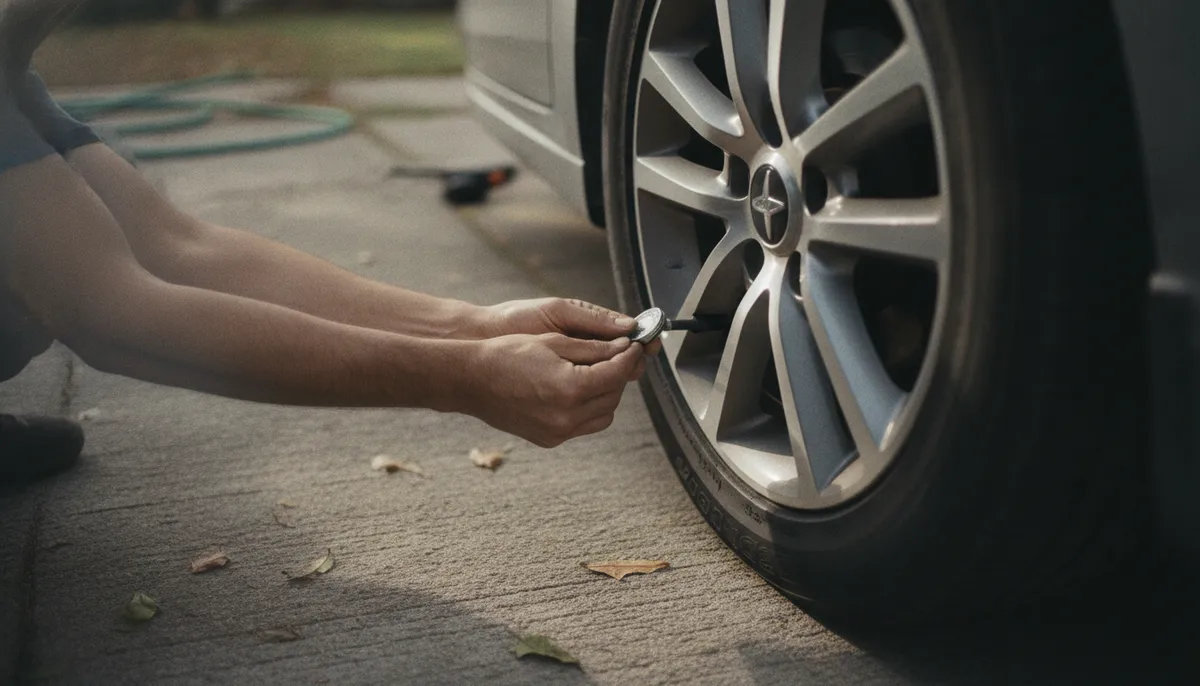
Your tires are the only thing touching the road, but most drivers treat them like an afterthought. You don’t notice the damage until the alignment is ruined. The low tire light on your dashboard isn’t just a suggestion; it’s a warning that needs immediate attention from you. Why wait until the sidewall starts cracking or the tread disappears entirely? Is it worth the risk? Probably not. When your tires are under-inflated, your engine has to work harder to push the car, which drags your fuel economy down into the gutter. Plus, if you rotate those tires every 5,000 to 7,500 miles, you won’t have to watch the drive wheels strip the tread while the trailing ones stay fresh. It’s a simple swap that doubles the life of a $800 set of rubber.
I recently talked to a shop manager in Ohio who saw a customer ruin a brand-new drivetrain because of mismatched tires. If you have an all-wheel-drive vehicle, this is even more vital. Different tread depths on the same axle can confuse the computer sensors. This leads to a drivetrain failure that costs north of $3,000, which is a lot more than the cost of a quick rotation. The Car Care Council, a non-profit group headquartered in Bethesda, Maryland, estimates that simple neglected maintenance like this costs American drivers billions every year. You can avoid that trap by checking your pressure once a month with a five-dollar gauge. It’s fast. It’s cheap. And it keeps your suspension from taking a beating it wasn’t designed to handle.
Suspension parts like struts and ball joints are expensive to replace because the labor is intense. When your tires are bald or out of balance, they vibrate. That vibration travels up through the car and shakes your suspension components to death. It’s a chain reaction. You think you’re just saving money by not buying tires, but you’re actually pre-ordering a $1,500 suspension rebuild. And in 2026, labor rates at shops are hitting $150 an hour in many cities. You simply can’t afford to let one problem turn into three.
Is Your Engine Coolant Eating Your Radiator?
Coolant doesn’t just keep your engine from melting; it prevents corrosion inside the metal passages of your block. But over time, the chemicals in that fluid break down. It becomes acidic. When that happens, the liquid that’s supposed to protect your engine starts eating it from the inside out. You’ll see it first as a tiny leak, then as a cloud of white steam on the highway. Monitoring fluid levels and colors prevents that acidic buildup or sludge from forming in the first place. If your coolant looks like muddy water or has small floating particles in it, the pH level has likely shifted. That’s a sign you need a flush immediately.
I’ve seen people ignore a slow leak for months, only to have their radiator burst on a Tuesday morning commute. That’s when the real bill arrives. When the engine overheats, the metal expands and warps the cylinder head. That’s how you end up with Gary’s $4,000 head gasket bill. The engine might even be a total loss. Compare that to a $150 coolant flush every few years. It’s not even a contest. You’re essentially buying insurance for your engine block. The ASE, which tests and certifies automotive technicians, notes that cooling system failure is the leading cause of engine-related breakdowns. Don't be that person on the side of the road with the hood up.
Checking your oil is just as critical. Modern engines use thinner oil than cars from twenty years ago to meet fuel efficiency standards. These thin oils are great for gas mileage but they disappear faster. If you go 10,000 miles without checking the dipstick, you might be running two quarts low. That’s less oil to lubricate the moving parts and less oil to carry heat away from the pistons. It’s a recipe for a seized engine. You should pull the dipstick every two weeks. It takes thirty seconds. It saves thousands.
Protecting The Alternator By Cleaning Your Battery
Most people don’t think about their battery until the car won’t start on a cold morning. But your battery and your alternator are in a constant tug-of-war. If the battery terminals are covered in that white, crusty corrosion, the alternator has to work twice as hard to push a charge through. Cleaning battery terminals every six months protects the alternator and prevents those middle-of-the-night towing fees. A new alternator can easily run you $600 with labor, while a wire brush and some baking soda cost practically nothing.
You can see the corrosion just by popping the hood. It looks like sea salt or blue-green fuzzy growth. If you let it sit, it creates resistance. This heat can actually melt the plastic battery casing or fry the voltage regulator in your alternator. I’ve seen alternators fail on three-year-old cars just because the owner never cleaned the terminals. It’s a preventable tragedy. And let’s be honest, nobody wants to spend their Saturday waiting for a tow truck in a grocery store parking lot. (I’ve been there, and the coffee is never good.)
While you’re looking at the battery, check the age. Most batteries last three to five years. If yours is pushing four years, get it tested at a local parts store. They usually do it for free because they want to sell you a battery. But it’s better to know now than to find out when you’re late for work. A weak battery puts a strain on the entire electrical system, including your starter motor. You're trying to keep the whole system healthy, not just one part. Everything is connected.
Air Filters And The Delicate Mass Air Flow Sensor
Your engine is basically a giant air pump. It needs to breathe. A clean filter ensures the mass air flow sensor (a delicate wire that measures air density to calculate the perfect fuel mix) stays clean and accurate. If that sensor gets coated in dust or oil from a dirty filter, your fuel economy will tank. Worse, the car might start stalling or lunging at stoplights. Replacing that sensor can cost $300 or more, but a new air filter is about twenty bucks. You can usually change it yourself in three minutes without any tools.
I’ve watched people ignore their air filter until it looked like a charcoal briquette. At that point, the engine is gasping for air. It still runs, but it burns more fuel to make less power.
FAQ
How often should I check my tire pressure? At least once a month. Proper tire pressure improves fuel economy, extends tire life, and reduces strain on suspension components.
Why is coolant maintenance important? Coolant prevents overheating and internal corrosion. Old or contaminated coolant can damage the radiator and engine over time.
How frequently should I check my oil level? A quick oil check every couple of weeks helps prevent low oil levels that can lead to serious engine damage.
Can dirty battery terminals damage my car? Yes. Corrosion creates electrical resistance, which forces the alternator to work harder and may shorten its lifespan.
When should I replace my car battery? Most batteries last around 3 to 5 years. Testing it before failure can help you avoid unexpected breakdowns.
Does replacing the air filter really matter? Absolutely. A clean air filter helps maintain fuel efficiency and protects sensitive engine sensors from dirt buildup.