
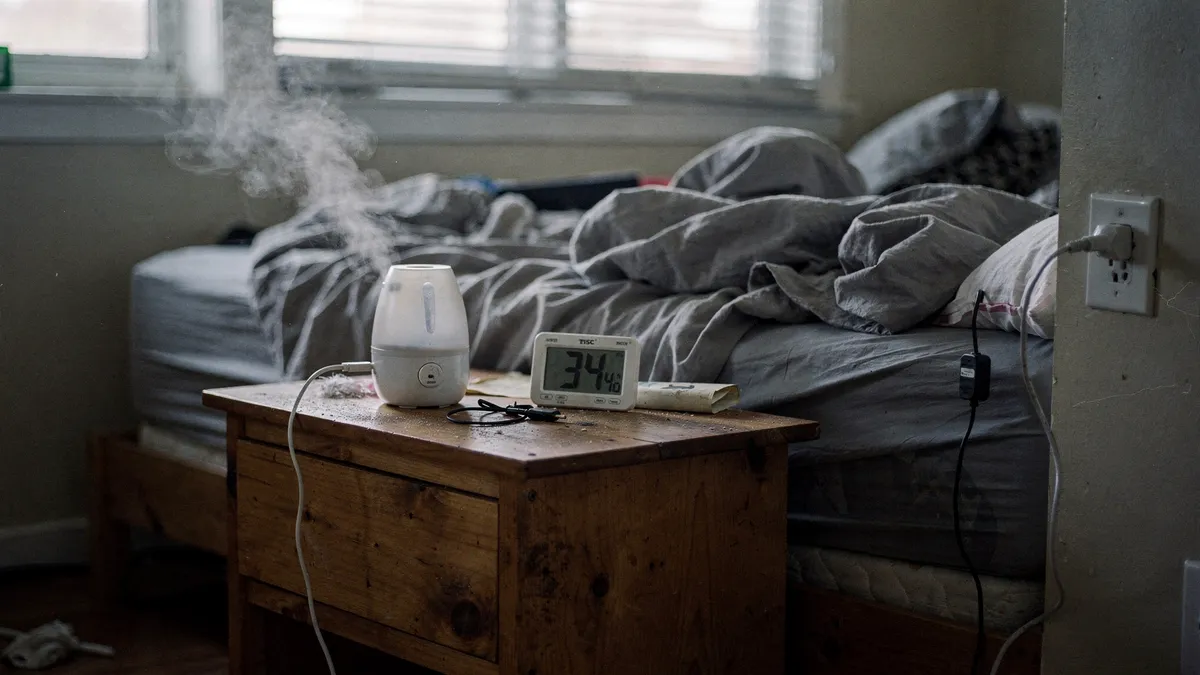
If you're experiencing static electricity shocks, bloody noses, or dry skin in the winter, you might need a humidifier. A humidifier is an electric home appliance that releases moisture into the air to help increase the humidity in your home.
Compact Humidifiers For Bedroom Comfort: What's the Right Humidity Level for Sleeping
The best relative humidity for sleeping and other indoor activities has been debated. According to the Environmental Protection Agency (EPA), the best indoor relative humidity falls between 30% and 50% - and it should never exceed 60%. A humidifier with a built-in hygrometer can help you determine the current humidity level in your home and monitor the progress as it increases.
Humidity levels can vary throughout your home, so it may be helpful to have a humidifier with a hydrometer in the room where you sleep. Other humidifiers may have a digital screen that displays the current humidity level.
Types of Humidifiers and How They Work
There are several different types of humidifiers: central, cool mist, and warm mist. Central humidifiers are typically attached to heating, ventilation - and air conditioning (HVAC) systems and affect the humidity level in the entire home. Cool mist humidifiers and warm mist humidifiers can be used in individual rooms.
Cool mist humidifiers come in several different varieties:
- Ultrasonic humidifiers create a fine mist by vibrating water into tiny droplets. Because there's no heating element, these machines tend to be more energy efficient than vaporizers and are quiet.
- Impeller humidifiers (also known as "cool mist" humidifiers) produce a cool mist by means of a high-speed rotating disk. These machines tend to be inexpensive but can use lots of energy and make a good deal of noise.
- Vaporizer humidifiers turn mineral-laden tap water into steam, which is then released into the air. Because the steam cools quickly, these devices are sometimes categorized as cool mist humidifiers. Vaporizers tend to be less expensive than humidifiers, but they use plenty of energy and can cause burns if hot steam or water is accidentally spilled on the skin.
Minerals Released by Humidifiers Can Be Harmful
Both ultrasonic humidifiers and impeller humidifiers can release minerals into the air - which can be harmful to breathe. The EPA recommends using distilled or demineralized water in cool mist humidifiers, which tend to release minerals into the air. However, even humidifiers that are labeled "demineralizing" can still release minerals into the air.
One study found that humidifier output aerosolized particles of potentially toxic elements including arsenic, cadmium, lead - and manganese. These substances are harmful when inhaled. Continuous exposure to high concentrations of these substances has been linked to serious health conditions, including cancer and nervous system damage. Brief exposure can cause nausea, vomiting, and diarrhea.
The study authors recommend that humidifier users consult local water quality reports and consider using an alternative water source if contaminant levels of arsenic, lead - manganese, and cadmium are above safe drinking water guidelines. They also recommend cleaning humidifiers daily to prevent the development of mold and other biological contaminants.
How Warm Mist Humidifiers Work
In warm mist humidifiers, water is heated until it boils, creating steam. The steam is then released into the air, cooling as it travels away from the machine. Because warm mist humidifiers kill bacteria and mold before releasing steam into the air - they can help minimize the risk of contaminated water from a humidifier affecting your health. However, warm mist humidifiers tend to have higher operating costs and pose a greater risk of burns from hot water or steam.
Health Risks Associated With Humidifiers
Indoor exposure to dry air during heating periods has been associated with dryness and irritation symptoms of the upper respiratory airways and the skin. Irritation of the mucous membrane, the protective lining of cells that coats the respiratory tract, can increase the risk of viral infections, including the flu. By keeping the mucous membrane moist - using a humidifier may help decrease your risk of getting sick.
However, humidifiers can also pose health risks. If you use a humidifier, it's important to clean and maintain it properly. According to the EPA, dirty or contaminated humidifiers can breed microorganisms like mold and mildew, which can become airborne when the humidifier is turned on. Inhaling these contaminants can cause a variety of health problems - including hypersensitivity pneumonitis an inflammation of the lungs similar to pneumonia.
The risk isn't limited to cool mist humidifiers. One study found that both cool mist and warm mist humidifiers were colonized with microorganisms within three days of being filled with tap water. Legionella, the bacterium responsible for Legionnaires' disease, was found in nearly half of the humidifiers studied.
To minimize the risk of developing airborne contaminants, the EPA recommends cleaning and drying humidifiers every third day. After rinsing the humidifier, refill it with fresh water. Use distilled or demineralized water to further reduce the risk of releasing contaminants into the air.
When the humidifier isn't in use - empty the water tank and clean it according to the manufacturer's instructions. Storing the machine dry will help control the growth of mold, fungi, and microorganisms.
References
- relative humidity for sleeping and - sleepfoundation.org
- dry air during heating periods - pmc.ncbi.nlm.nih.gov


