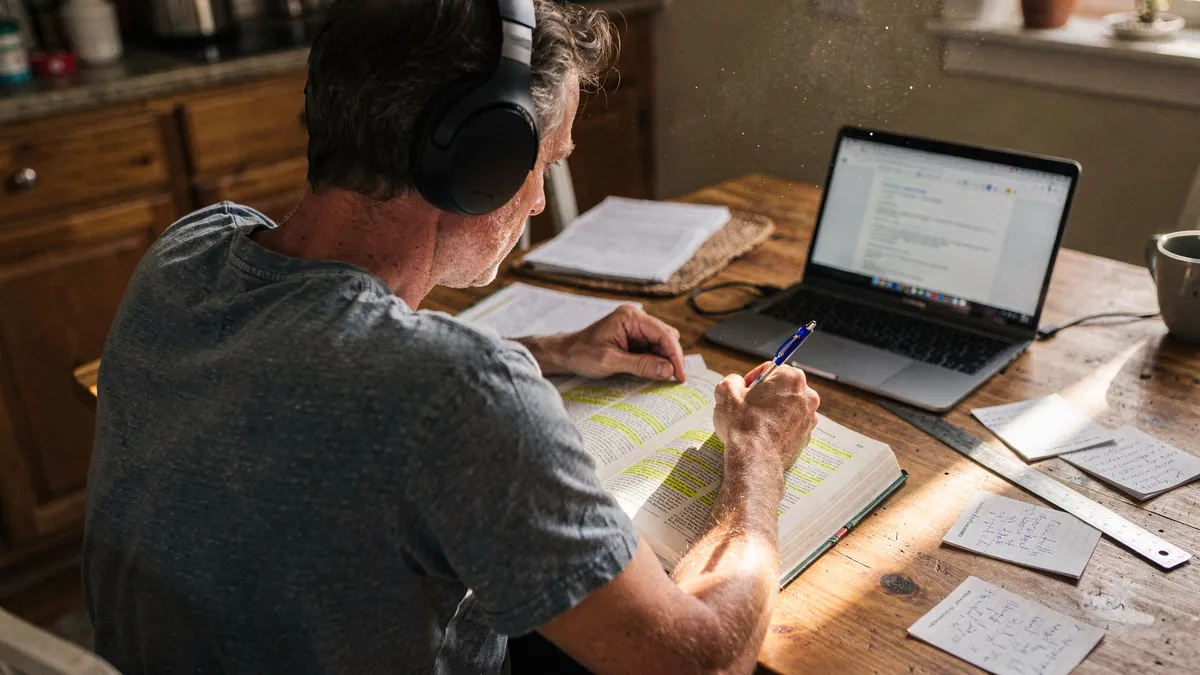
For students and scholars who need to study in coffee shops or crowded homes, noise cancelling headphones can provide an escape. We tested dozens of models to find which ones block out distracting sounds, like speech and traffic, best.
Why Noise Reducing Headphones for Focused Study Are Worth Considering
Noise-cancelling headphones can help block out background noise and distractions, allowing you to stay focused and productive. They can also provide a more relaxing atmosphere for those who enjoy listening to guided meditations or mindfulness exercises while studying. Our tests identified which headphones deliver the most noise reduction and are therefore best suited for studying in noisy environments.
Noise-cancelling headphones aren't just for plane rides and busy offices. If you require a peaceful studying environment but can't always find one - these headphones could be for you. We tested and compared several pairs of headphones with active noise cancelling, which uses antinoise generated by the headphones to cancel out distracting sounds like speech and traffic.
In our tests, the headphones worn on the head with active noise cancelling provided up to 30 decibels of noise reduction. That's a significant drop in decibel level - equivalent to the difference between a quiet conversation and a loud one. The Sony WH-CH720N was the lightest full-sized, over-ear, noise cancelling headphone tested to date.
Inside the cup of each headphone - a built-in microphone measures the ambient sound waves reaching the ear. Electronics in the headphones then generate sound waves, called antinoise, that are exactly out of phase with the ambient noise. The antinoise interferes with the noise and cancels it out.
What you have to understand is that active noise cancelling works best on steady, low-frequency sounds and so it does a very good job on things like engine hum or air conditioning but it does a less complete job on sudden, sharp sounds like a door slamming or someone laughing nearby and you should keep that in mind before you buy. The simple fact is that passive noise isolation, which just means the physical seal the ear cups make around your ears, adds on top of the active cancelling and so a headphone that fits your head well will always perform better than one that leaves gaps around your ears.
What you have to understand is that not all background noise is the same and so a headphone that does a great job on a constant low rumble like an air conditioner may still let through a lot of the choppy, irregular noise of people talking nearby and you should keep that in mind if speech is your main problem when you study. The simple fact is that some people find the pressure sensation that active noise cancelling creates inside the ear cup uncomfortable and so if you are sensitive to that feeling it is worth testing a headphone before committing to it because that sensation does not go away with time for everyone.
How Noise-Cancelling Headphones Protect Your Hearing While You Study
Noise-cancelling headphones can protect your ears from potentially damaging noise. By blocking out external noise, noise-cancelling headphones allow you to listen to audio at lower volumes, which can help protect your ears from hearing damage. The CDC estimates that 22 million workers are exposed to potentially damaging noise at work each year - and it's also reported that 100 million people are exposed to dangerous environmental noise due to traffic, personal listening devices, and other sources.
Noise levels are measured in decibels, and exposure over 85 decibels can damage your hearing. The European Environmental Agency reports that noise ranks second only to air pollution as the environmental exposure most harmful to public health. The World Health Organization (WHO) estimates that at least 1 million healthy life-years (disability-adjusted life-years) are lost annually as a result of environmental noise in high-income western European nations .
Noise-cancelling headphones can help protect your hearing from this potentially damaging noise. Estimates hold that chronic noise exposure contributes to 48,000 new cases of heart disease in Europe each year and disrupts the sleep of 6.5 million people. In our tests - we found that headphones with active noise cancelling (ANC) performed better at reducing noise than those with only passive noise cancelling.
Passive noise cancelling, like earbuds that seal well, is less effective than active noise cancelling. We tested headphones' ability to reduce three common noises that can be distracting or harmful to hearing: speech, city traffic, and a noisy classroom. We placed the headphones on a mannequin head and measured the volume of each type of noise at the eardrum with a dosimeter both with the ANC feature turned on and turned off.
Keep in mind that a common mistake people make is turning up the volume to compensate for outside noise that is still leaking through and so this habit actually defeats the whole purpose of wearing noise-cancelling headphones in the first place and can still lead to the same kind of hearing strain you were trying to avoid. The fix for this is simple and it is to set your volume at a comfortable level before you put the headphones on and then resist the urge to raise it when you move to a noisier spot. On top of that, if you already have any existing hearing sensitivity or tinnitus you should talk to a doctor before relying heavily on noise-cancelling headphones for long daily sessions because prolonged use at any volume still deserves some caution.
What to Know Before Buying Noise Reducing Headphones for Focused Study
Our tests showed that noise-cancelling headphones are very effective at reducing the level of speech - and somewhat effective at reducing the noise from city traffic and a noisy classroom. However, it's important to remember that no headphone can completely block out all outside noise. If you plan to use your headphones while driving or crossing the street, you'll want to choose a pair that allows some traffic noise to reach your ears so that you can safely hear oncoming cars.
While testing the headphones we found that some of them isolated the listener so well that we felt uncomfortable walking around while wearing them. For example, the Skullcandy Crusher ANC 2 features proprietary "Crusher" technology, which creates "sensory bass" that vibrates your skull. This may be an enjoyable feature - but it provides a whole new level of isolation.
For half a century, U.S. agencies such as the EPA have deemed noise pollution "a growing danger to the health and welfare of the Nation's population." OSHA requires employers at general industry, maritime, and longshoring worksites to implement a hearing conservation program when employee noise exposures equal or exceed 85 decibels (dBA) as an 8-hour time-weighted average (TWA). Our tests show that headphones with active noise cancelling can significantly reduce the level of potentially damaging noise.
When shopping for noise-cancelling headphones, consider buying from a manufacturer or model that has been tested by an independent lab. While we found that all of the headphones with active noise cancelling offered about the same amount of noise reduction - not all headphones are created equal.
The simple fact is that fit matters more than most people expect and so if the ear cups do not sit flat and snug against your head the passive seal breaks down and the active cancelling has to work harder and still delivers less reduction than the numbers on the box suggest. A very common mistake is buying a headphone based on the noise-cancelling rating alone without checking whether the headband and cups suit the shape of your head and so for most people it is worth trying a headphone on before buying if that option is available to you.
What you have to understand is that over-ear headphones and on-ear headphones behave differently and over-ear cups fully surround the ear and so they tend to give you better passive isolation on top of the active cancelling but on-ear cups press against the ear and can let more outside sound through and this is a difference that matters a lot when you are trying to study in a loud place. Keep in mind that battery life is also something you need to think about before buying because active noise cancelling draws power and so if the battery dies mid-session on many headphones the active cancelling simply stops working and you are left with only passive isolation which is noticeably less effective.
What People Get Wrong
A lot of people think that noise-cancelling headphones will make the environment completely silent and so they are surprised when they can still hear some sounds and this is just not how the technology works and you should expect a big reduction in noise but not total silence. On top of that people assume that more expensive always means more noise cancelling but the simple fact is that fit and ear cup design affect real-world performance just as much as the electronics inside and so a cheaper headphone that fits your head well can outperform a pricier one that does not. Keep in mind that some people confuse passive noise isolation with active noise cancelling and these are different things and passive isolation is just the physical blocking that ear cups provide while active cancelling adds an electronic layer on top of that. What you have to understand is that using noise-cancelling headphones does not mean you can safely raise your volume to very high levels and the goal is to keep your volume lower than you would without them and not to use the noise reduction as permission to play audio louder.
What This Does Not Cover
This article talks about noise-cancelling headphones for general study use and it does not cover headphones intended for industrial hearing protection or for use in workplaces with very high noise levels and those situations have their own safety standards and rated protective equipment. The advice here is general and it is meant for people who are studying in everyday noisy environments like coffee shops or shared living spaces and if you have a diagnosed hearing condition or sensitivity you should talk to a doctor or audiologist before making decisions about headphone use based on this article. On top of that this article does not cover in-ear monitors or custom-molded earpieces which behave differently from the over-ear headphones discussed here.
References
- headphones can help block out - medium.com
- 22 million - pmc.ncbi.nlm.nih.gov
- Environmental Agency reports that noise - magazine.hms.harvard.edu