Tangle Teezer's Naturally Curly detangling brush joins a crowded field of brushes designed to help reduce damage while brushing. But how do you know which brush is right for you?
Detangling Brushes For Curly Hair Care: What's a Detangling Brush?
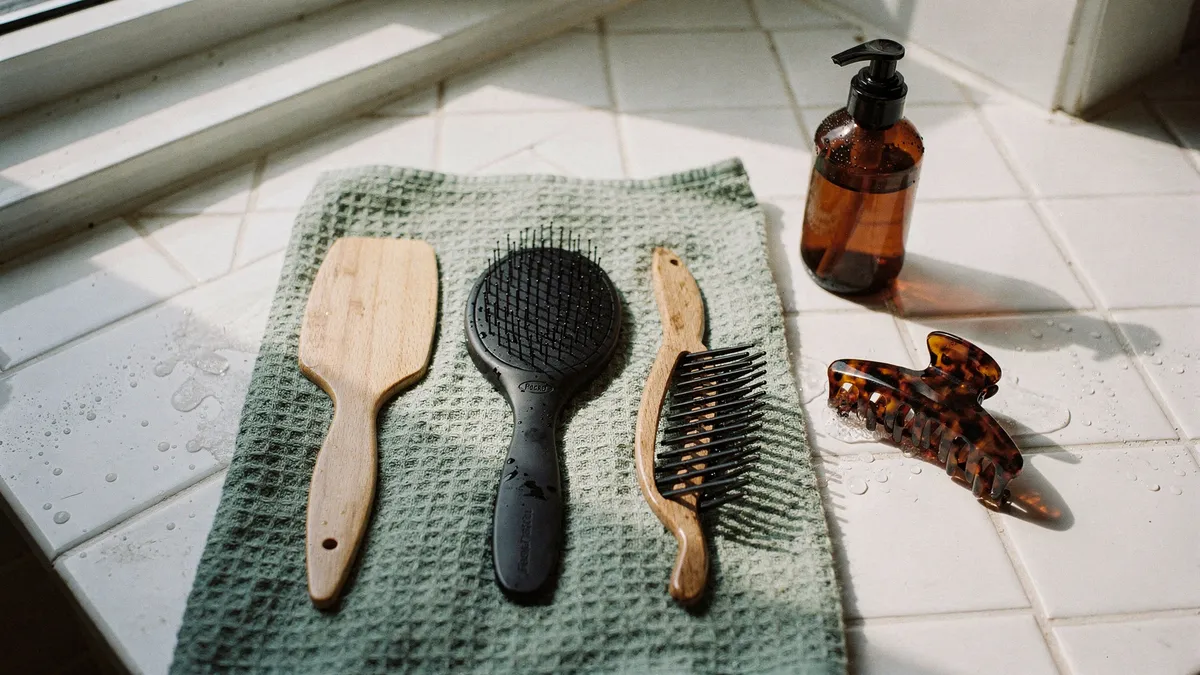
Detangling brushes have a variety of features that regular brushes lack. They're typically characterized by wider spacing between bristles, allowing hair to pass through easily without catching and creating static. The flexible bristles themselves are typically made of plastic; they may be rounded or flat, and varying levels of stiffness may be appropriate depending on your hair type.
While some detangling brushes have both a long - straight bristle side and a curved side, others may feature only one style. Handles may be plastic or wood, and longer handles allow for easier brushing with less strain. For all hair types but particularly coarse or curly hair, using a detangling brush is preferable to using a regular brush with densely packed, stiff bristles. That's because detangling brushes are designed to separate strands so knots can release without forcing breakage - saving your hair from damage.
Why Are There So Many Brushes?
Brushing your hair seems simple enough. After all, it's just a household tool with a couple of basic functions: remove debris, stimulate blood flow, distribute natural oils along the hair shaft - and style. So why are there so many of them?
It turns out there are plenty of factors involved in making sure your brush is up to the task, including considerations such as your hair type, lifestyle, budget, and styling preferences. The market is segmented based on brush type - design, technology, distribution channel, and region. Each segment has a variety of options and price points available for customers.
Common Problems With Hairbrushes and How to Avoid Them
However, for most hair care products - FDA pre-approval isn't required. This means manufacturers are responsible for ensuring that their products are safe.
Choosing the wrong brush - or using the right brush incorrectly - can cause serious problems. Research shows that improper brushing technique or choice of tools can contribute to several medical conditions, including trichomalacia (weak hair), trichorrhexis nodosa , and even traction alopecia .
According to the research, the ideal brush features flexible boar bristles - soft synthetic filaments, or a combination of both. Bristles should be smooth, flat, and spaced, as opposed to round and clustered. The brush should have a rubber base with an ergonomic handle for easy gripping.
What Makes Detangling Brushes for Curly Hair Care Different
While those features described above are beneficial for all hair types - curly hair requires a little something extra. The following three characteristics distinguish a detangling brush from a regular brush.
- Flexible bristles: Although many brushes claim to have flexible bristles, the truth is that most brushes with densely packed bristles simply aren't designed to allow hair to easily pass through. The bristles on a detangling brush are typically made of a flexible plastic that won't snag or damage hair.
- Spaced-out bristles: Spaced bristles prevent hair from getting caught, which is especially important for those with thicker or curlier manes. Some detangling brushes feature both long, straight bristles and shorter, curved bristles on either side of the brush.
- Fan-out or ball-tip designs: Both styles prevent damage while brushing by distributing pressure across multiple bristles rather than one. Ball-tip bristles are better for sensitive scalps - while fan-out bristles are better for removing tangles.
Do You Need a Detangling Brush?
The best brush for you may depend on your hair type and personal preference, but any of the top three should provide benefits that extend far beyond reducing friction and static.
The next time you're considering a new hair brush, consider the benefits of a detangling brush. At worst, it will make styling your hair more enjoyable. At best, it could save you from considerable damage and breakage.
References
- Flexible bristles: Although many brushes claim to have flexible bristles, the truth is that most brushes with densely packed bristles simply aren't designed to allow hair to easily pass through. The bristles on a detangling brush are typically made of a flexible plastic that won't snag or damage hair. — google.com
- Spaced-out bristles: Spaced bristles prevent hair from getting caught, which is especially important for those with thicker or curlier manes. Some detangling brushes feature both long, straight bristles and shorter, curved bristles on either side of the brush. — google.com
- Fan-out or ball-tip designs: Both styles prevent damage while brushing by distributing pressure across multiple bristles rather than one. Ball-tip bristles are better for sensitive scalps - while fan-out bristles are better for removing tangles. — google.com