Raised Garden Beds for Beginner Vegetable Growing: here's what actually helps. Raised beds and container gardens refer to improved areas of soil lifted above ground level where plants can grow. They have several benefits over traditional in-ground gardens.
Why Raised Beds Work So Well for Growing Vegetables
The soil in raised beds warms up faster in the spring, allowing you to plant earlier. The lifted soil level also improves drainage, even in areas with just an inch or so of rain. So if you're working with compacted soil or clay, a raised bed can provide a growing area that drains well and warms quickly.
Since you're not walking on the soil in the bed, it stays nice and loose and doesn't get packed down. This also allows roots to easily grow through the loose - uncompacted soil. Raised beds can produce two to three times more food than in-ground gardens of the same footprint since you can space plants closer together in a raised bed.
You can also grow a large number of plants in a small space using vertical supports and different levels of trellises. Gardening in raised beds reduces bending, which is especially helpful for older adults or people with mobility issues. And since you add soil to fill the beds, they can be built on concrete or asphalt, allowing people to garden where it would otherwise be impossible.
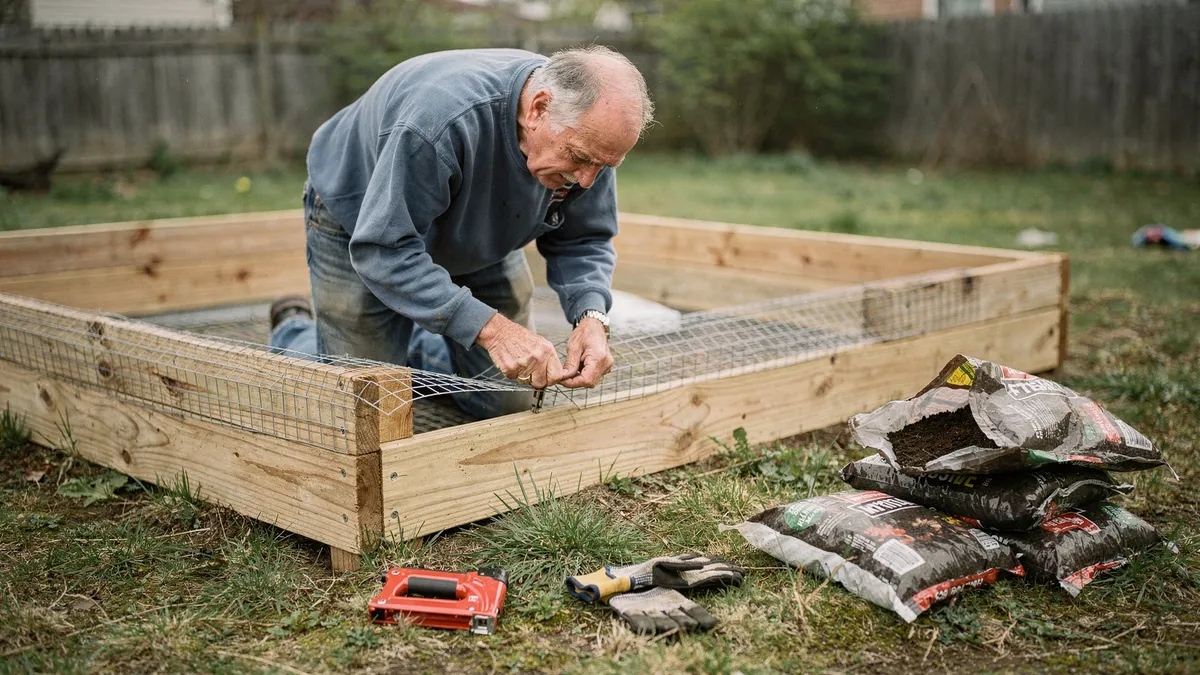
Finally, it's easier to control weeds and pests in a raised bed. You can place fine mesh screens under the bed to prevent pest insects from accessing the soil from below - and it's easy to run row cover cloth over low beds to protect plants from herbivores.
How to Build Raised Garden Beds for Beginner Vegetable Growing
Raised beds are improved areas of soil lifted above ground level and often contained with boards or other rigid materials. Materials to consider for building raised garden beds include wood, concrete, brick, stone, recycled plastic - corrugated steel, galvanized steel, and aluminum. Wood is arguably the most convenient option for raised garden beds, being durable and versatile.
A common height for raised garden beds is eleven inches, which is equivalent to two 2x6 boards stacked on edge. However - beds taller than 11 inches are useful where the soil underneath is poor and unusable or where the gardener can't bend very much. Taller beds reduce the need to bend while gardening.
The face of the boards can be placed vertically on their edges or laid flat on top of each other to achieve the desired height. Boards of all different sizes and types can be used to build raised garden beds, but it's important to remember that smaller boards will dry out and degrade faster than larger boards. It's also a good idea to use naturally rot-resistant woods such as cedar, cypress, or redwood, or to treat the wood with a non-toxic water sealant.
Four feet across is considered an ideal width for raised garden beds - allowing comfortable reach to the center from either long side. An average length is eight feet, though this isn't critical. A raised bed that's 10 to 18 inches in height is ideal.
Deeper beds allow gardeners to grow larger plants with longer roots, but remember that deeper beds will require more soil. Build the frame of your raised bed according to the height, length, and width you chose in Step 1. Be sure to add cap timbers on the top of the boards to make the bed look nicer - keep soil from washing away, and keep animals from tipping over plants.
Old pallets can also be used to build raised beds. There are many online tutorials describing how to build raised beds of all shapes, heights, and sizes, and to accommodate wheelchairs or other equipment.
Soil to Fill Your Raised Bed
The type of soil you add to your raised bed is very important. Don't use soil straight from a landscaping project as it could be compacted and full of weed seeds. Instead - fill your raised beds with a combination of garden soil and compost.
Beginners might consider using a soilless medium such as a peat moss and perlite mix, rice hulls, coir (coconut husks), or pine bark mulch. Soilless media don't have nutrients, so you will need to add fertilizer. Soilless media are also very light and drain very well. Because they don't provide structural strength - soilless media are best used in shorter beds less than six inches high.
Tips for Managing Your Raised Bed Vegetable Garden
Raised beds can dry out quickly. Install soaker hoses or drip irrigation in the bottom of your beds and add mulch on top of the soil to help retain moisture. Consider using a lightweight cover crop, like winter rye, to shade the soil, prevent erosion, and add organic matter. As the cover crop decomposes - it will add nutrients back into the soil for the next planting season.
Remove and replace the top six inches of soil every three years to ensure that the soil in your raised beds remains healthy. Over time, soil can become depleted of nutrients, compacted, or overrun with pests and diseases. Replacing the top layer of soil every couple of years prevents these issues from getting out of hand.