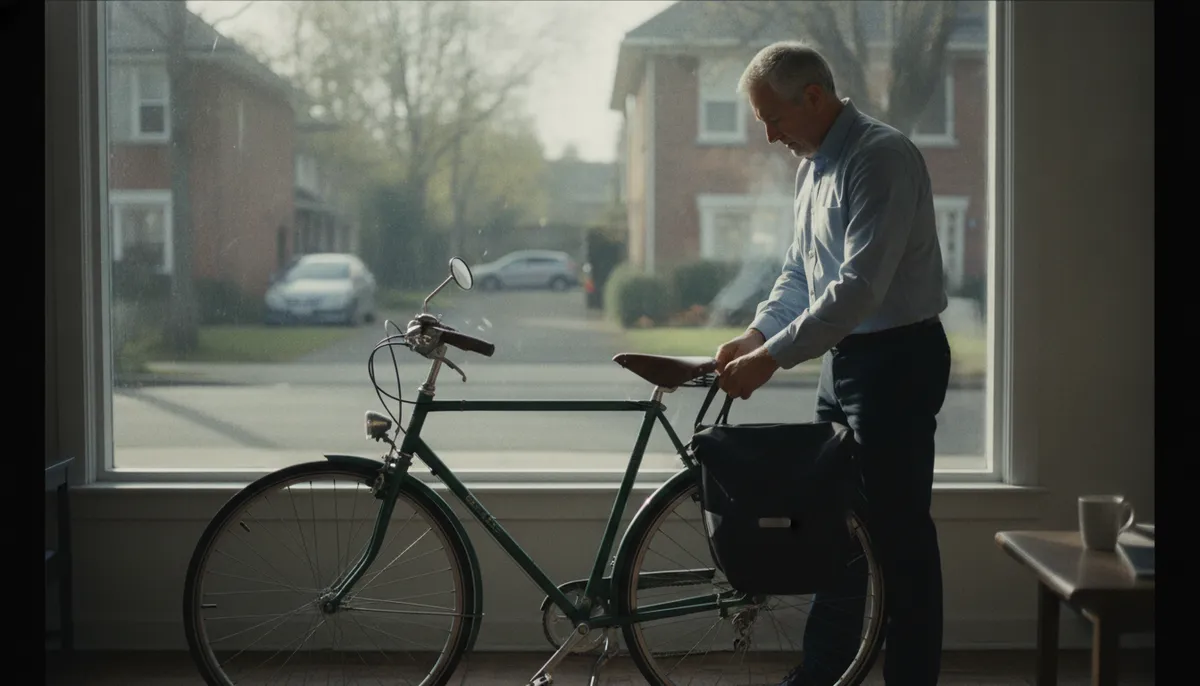
Riding a bike to work after 50 is not a stunt. Plenty of people do it quietly every day, and most of them will tell you the same thing: the bike matters less than the handful of parts that touch your body and keep drivers aware of you. The cycling industry would prefer you believe otherwise, because a new bike carries a bigger margin than a saddle and a mirror. This guide covers the gear that research and rider consensus keep pointing to, with real models, honest prices, and a section on what the marketing oversells.
One framing note before the list. The complaints that push older riders off bikes are boringly consistent: a sore backside, a stiff neck from checking traffic, feeling invisible at dusk, and a sweaty back from carrying a bag. Every item below answers one of those four problems directly. Nothing here makes you faster, and that is the point.
The saddle: comfort comes from shape and position, not foam
The thick gel saddle at the department store looks like the comfortable choice and usually is not. Soft padding compresses under your sit bones and pushes up everywhere else, which is exactly where you do not want pressure on a ride longer than ten minutes. What works for an upright commuting position is a saddle wide enough to support the sit bones, with some give built into the structure rather than the surface.
The standard answer for decades has been the sprung leather Brooks B67, around $185 as of late 2026. The leather top hammocks between the rails and the coil springs take the edge off broken pavement. Two honest caveats. First, leather needs a break-in period measured in weeks, not days, and it wants a rain cover because soaked leather sags. Second, $185 is real money, and a $35 wide sprung saddle such as the Cloud-9 cruiser line gets you a meaningful share of the comfort if the budget is tight. The B67 is the buy-once version, backed by a ten year guarantee, not the only version.
Whatever saddle you choose, position does more than the saddle itself. A seat that is too low loads your knees, and a bar that is too far away loads your hands and neck. A bike shop will set both in fifteen minutes, often free with a purchase.
The mirror: the cheapest fix for the stiffest neck
Shoulder checks get harder as necks get older, and a rider who cannot comfortably look back starts guessing about traffic. A mirror ends the guessing. The Mirrycle MTB bar end mirror, around $19 as of late 2026, plugs into the end of a flat handlebar, holds its position, and shows a genuinely useful view rather than the postage stamp you get from helmet mounted mirrors. Riders who use one almost never go back to riding without it.
It is not elegant. It sticks out, it will get knocked when you lean the bike against a wall, and drop bar bikes need a different model. None of that changes the math: this is the highest value $19 in commuting.
Lights: buy them for 3pm, not midnight
Most commuters think of lights as nighttime equipment. The more common problem is being overlooked in flat afternoon light, in rain, or in the long shadows of fall commutes. That is why modern commuter lights ship with daytime flash modes, and why a light worth buying is bright enough to register in daylight.
The Cygolite Metro Plus 800, around $66 as of late 2026, has been the default recommendation in commuter forums for years for a reason: 800 lumens, USB charging, a daytime flash that gets noticed, and a mount that survives daily removal. Pair it with a bright rear light with its own daytime mode, such as Cygolite's Hotshot series, typically around $40. The honest caveat is battery discipline. A rechargeable light you forgot to charge is a paperweight, so either build charging into your routine or buy a second cheap rear light as a backup.
Panniers: get the load off your back
A backpack on a warm commute means a sweaty shirt, and after 50 it also means shoulder and lower back load you do not need. A rear rack and panniers move the weight to the bike, where it belongs. The Ortlieb Back-Roller pair, around $220 as of late 2026, is the standard because the bags are genuinely waterproof, clip on and off in one second, and outlast the bikes they are bolted to. Used touring bikes from the 1990s still wear original Ortliebs.
The honest question is whether you need that durability. If your commute is short and dry, a $60 pannier from any reputable brand carries groceries just as well for years. Buy the Ortliebs if rain is routine, if you carry a laptop, or if you would rather never think about this purchase again. You will also need a rear rack if your bike lacks one, typically $35 to $50 fitted.
What the marketing oversells
Some of what gets pitched at riders over 50 is real, and some is margin dressed up as care. A short list of the second kind:
- Gel saddle covers. They move around, they trap moisture, and they treat the symptom of a badly shaped saddle. Spend the money on the saddle.
- Padded shorts for short commutes. Useful on rides over an hour. On a 20 minute commute, a decent saddle makes them unnecessary, whatever the catalog implies.
- Age branded bikes. A bike marketed for seniors is usually an ordinary comfort hybrid with a markup. A step-through frame is a genuinely good idea for anyone with hip or balance concerns, but you can get one from any mainstream brand without the branding tax.
- Carbon anything. Weight savings matter in races. On a commute with panniers, a lighter frame changes nothing you can feel, and it costs hundreds.
- Suspension forks on cheap hybrids. At commuter price points these add weight and maintenance without absorbing much. Wider tires at lower pressure do the same job better and cost almost nothing.
If you buy in order
Start with the mirror, because $19 buys the biggest single change in how safe you feel. Add lights before the days get short. Fix the saddle the first week it complains. Add the rack and panniers when the backpack starts to annoy you, which it will. All in, the full list above runs around $530 at late 2026 prices, or closer to $200 if you take the budget route on the saddle and bags. Either number is a small fraction of a new bike, and unlike a new bike, every dollar of it addresses something that actually pushes riders off the road.
The bike you already own, adjusted to fit and wearing this short list, will carry you to work for years. That is the whole secret, and nobody selling bikes is in a hurry to tell it.