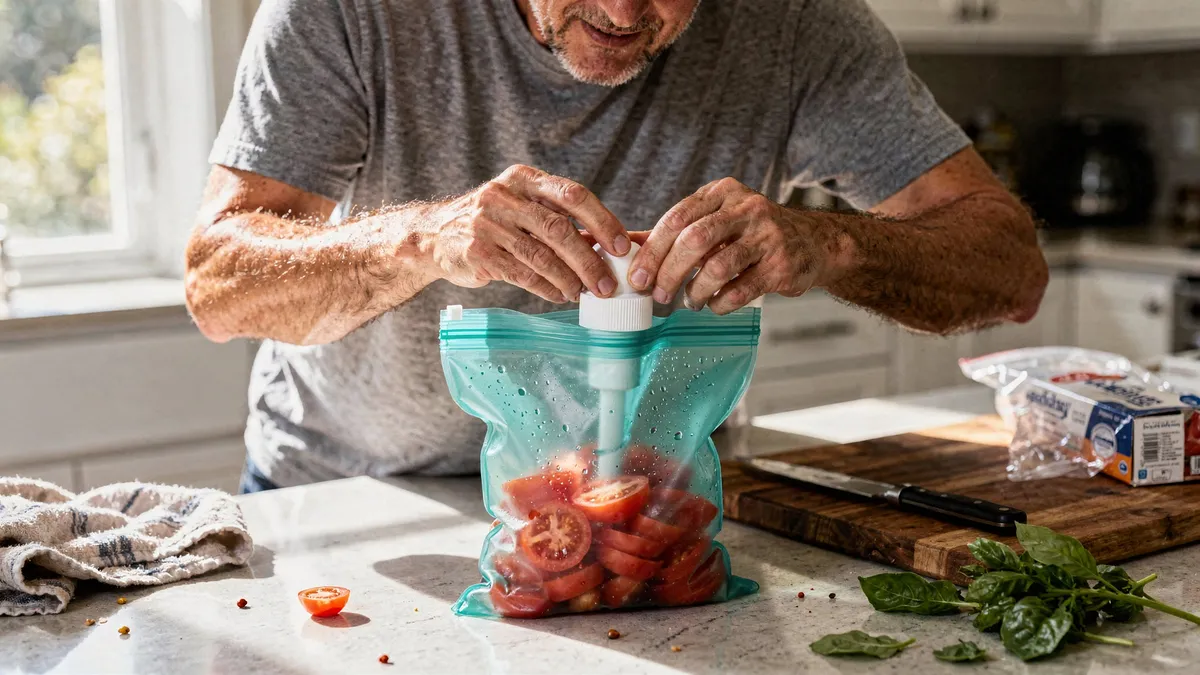
Some argue that silicone food bags are better for the environment, while others claim that single-use plastic bags are safer and more effective. Here is what you need to know before making a choice.
What Are Reusable Silicone Food Bags for Kitchens and How Do They Work
Containers and packaging make up a significant portion of the United States' municipal solid waste. Of course, that 82.2 million tons includes everything from corrugated cardboard boxes to aluminum cans and bottles, but it also includes plastic bags and sacks. On their own, plastic bags, sacks, and wraps amounted to 4.2 million tons of the municipal waste stream in 2018 - and only 10 percent of those materials were recycled.
Reusable silicone food bags may be one option.
These bags, which may or may not include accompanying vacuum pumps, are designed to do pretty much what you'd expect: They're reusable alternatives to single-use plastic bags. They're typically made out of a material called food-grade silicone, a type of silicone that has been tested and certified by the U.S. Food and Drug Administration (FDA) to be safe for contact with food. According to the FDA, this type of silicone is used in a wide variety of kitchen products - including those used for preparing, serving, and storing food.
A company that sells silicone reusable bags, the product is designed to help consumers store leftovers, meal prep - freeze foods like soups and breads, and even take their snacks on the go. "Just measure, seal, and go," reads the description for their product on Amazon. "It's that simple."
Some of these bags come with built-in vacuum pumps to suck the air out of the bag before sealing it. The idea is that removing oxygen from the bag will prevent oxidation - a chemical process that causes foods to spoil. In case you're wondering, yes, these bags are dishwasher safe, microwave safe, and freezer safe.
Why People Are Skeptical of Reusable Silicone Food Bags
But there are a few reasons why some people may be wary of investing in these bags. First and foremost - they're quite pricey.
Of course, part of the appeal of these bags is that they're reusable and designed to last. So even though it may be a considerable upfront investment, consumers may save money and reduce waste in the long run. Still, that brings us to another concern: Can these bags actually stand up to repeated use?
The lifespan of a reusable silicone bag isn't exactly an easy number to quantify. While it likely depends at least partially on how frequently you use the bag and how gentle you're during cleaning, it's not unreasonable to wonder if these bags might tear or puncture relatively easily - especially when compared to the thick rubbery material of a gallon-size resealable freezer bag. After all, the silicone material may harden over time, potentially leading to leaks.
Additionally, while the bags may be dishwasher safe, the ziplock closure typically isn't. This means you'll have to hand wash that part of the bag - which is a minor inconvenience that adds to the time and labor intensity of using these bags. Ultimately, this raises the question: Are these bags actually as convenient or effective as their single-use counterparts? According to a test of food storage bags conducted by America's Test Kitchen, the answer is a resounding no.
In their tests, the closure system on the silicone bags failed to provide an airtight or watertight seal. They also found that the bags themselves could be damaged with normal use and that they were difficult to clean. The clear winner in America's Test Kitchen tests for single-use plastic bags was, unsurprisingly - a gallon-size freezer bag. The co-winners, Ziploc Freezer Bags Gallon and LK 10" x 12" Gallon Heavy Weight Seal Top Freezer Bags (4 mil), impressed with easy-sealing, secure, leakproof closures.