Nobody packs a Pinterest lunch at 6:45 on a Tuesday morning. The parents who survive a whole school year of lunch boxes are the ones with a system: a short rotation of meals their kid reliably eats, assembled from things already in the fridge. This guide is about that system. It leans on ideas that real families repeat week after week, plus a small amount of gear that genuinely helps.
Use a template, not a recipe
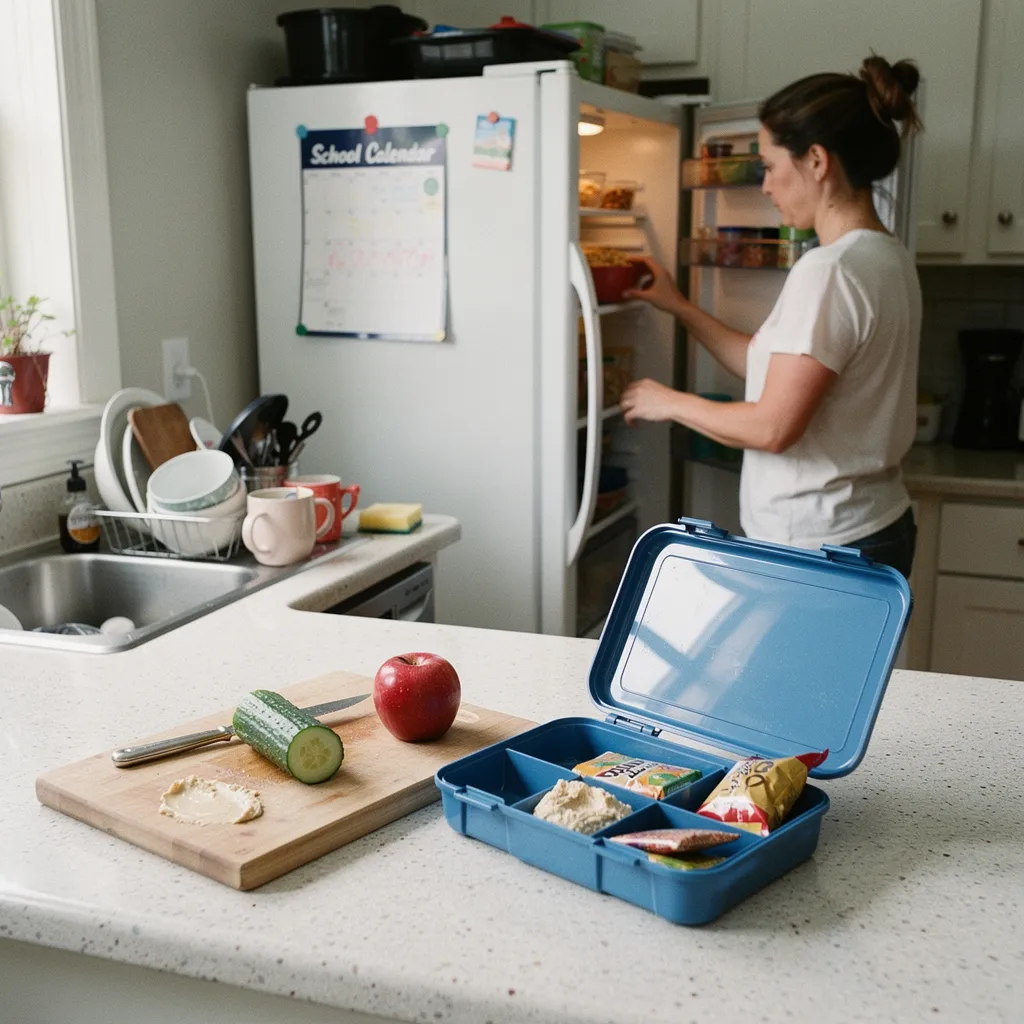
The lunches that get eaten are rarely inventive. What works is a fill-in-the-blanks template you can run on autopilot:
- A main your child already likes: a sandwich, a wrap, leftover pasta, rice with something on it.
- Something from the produce drawer: cucumber coins, snap peas, apple slices, cherry tomatoes, grapes. One safety note: NHS choking-prevention guidance says to cut grapes and other small round fruits, cherry tomatoes included, into quarters lengthways for young children.
- Something crunchy: crackers, pretzels, roasted chickpeas. Popcorn works for older kids, but skip it for children under five; the same NHS guidance says not to give popcorn or whole nuts to under-fives.
- A small extra that makes the box feel friendly: a couple of cookies, a square of chocolate, a note when you have thirty spare seconds.
Notice what the template does not require: novelty. Kids do not grade lunch on variety. Most are happiest with the same four or five boxes cycling for months, and that repetition is what makes 6:45 a.m. survivable for the person packing.
Five lunches parents actually repeat
The build-it-yourself box
Crackers, cheese cut into slices or cubes, and rolled turkey or ham, packed in separate compartments so the child assembles each bite. It is the homemade version of the lunch kits kids beg for in the grocery store, it costs a fraction as much, and the assembly is half the appeal. Add a handful of grapes, quartered for young children, and call it done.
Last night's dinner, kept hot
An insulated food jar turns one extra scoop at dinner into tomorrow's lunch. Pasta with red sauce, mac and cheese, fried rice, chili, and creamy soups all travel well. Warm the food thoroughly in the morning, preheat the jar by filling it with hot water for a few minutes while you do, then dump the water and pack the food. Skipping the preheat is the usual reason a thermos lunch comes home half eaten and lukewarm.
Pinwheels instead of sandwiches
Spread a tortilla with cream cheese or hummus, layer on turkey or shredded cheese, roll it tight, and slice it into rounds. Same ingredients as a sandwich, but the spiral shape reads as fun, the pieces suit small hands, and the tortilla does not go soggy the way bread can by noon.
Breakfast for lunch
A hard-boiled egg, a muffin, yogurt, and berries make a perfectly good midday meal, and kids treat the rule-breaking as a feature. A frozen yogurt tube pulls double duty here: it thaws by lunchtime and keeps the rest of the box cool on the way.
The dip box
Some kids will eat almost any vegetable if it comes with something to dunk. Pack hummus, tzatziki, or ranch in a small leakproof cup, then surround it with pita triangles, carrot sticks, cucumber, and bell pepper strips. Cut hard vegetables like carrot into narrow batons, and for little kids the NHS suggests grating or steaming firm vegetables soft rather than serving hard chunks. The vegetables are the delivery system and the dip is the sale.
For picky eaters, lower the stakes
The lunch box is the wrong place to introduce new foods. Your child is on a timer there, with nobody around to encourage a second bite, so whatever is unfamiliar simply comes home. Debut new foods at dinner, where the stakes are low, and let the lunch box carry proven winners. Two other tactics earn their keep: let kids pick between two acceptable options while you pack ("cucumbers or snap peas?"), and treat whatever returns uneaten as information rather than defiance. A box that comes home empty is the goal, even if the menu that achieves it looks boring to an adult.
The two pieces of gear worth buying
You can pack every lunch above in a zip-top bag and a paper sack. But two purchases make the daily routine noticeably smoother, and both are modest.
The Bentgo Kids lunch box, around $30 as of mid-2026, is the bento-style box you have probably seen at school pickup. Five compartments keep the dip off the crackers, the leak-proof lid means the yogurt stays where it was put, and the tray is dishwasher safe, which matters more by October than any other feature. Who it is for: elementary-age kids and the snacky, deconstructed lunches above. The honest limitation: the compartments are portioned for younger children, so a middle schooler with a real appetite will need a supplementary snack alongside it, and it does nothing to keep food warm.
The Thermos FUNtainer 10 ounce food jar, around $12 as of mid-2026 for the basic designs, is what unlocks the hot-lunch rotation. Thermos rates it to keep food hot for up to 5 hours and cold for up to 7, and the lid hides a folding spoon so you are never hunting for a fork at 6:50 a.m. Who it is for: any kid who would rather eat last night's pasta than another sandwich. The honest limitation: 10 ounces is genuinely small, closer to a hearty snack than a big-kid portion, and hot performance depends on you actually preheating it, a step that is easy to skip when you are rushed.
Beyond those two, a soft insulated bag and a slim ice pack, whatever brand is cheap at your grocery store, cover the rest. Anything perishable should ride next to that ice pack, and if something cold comes home warm at the end of the day, throw it out rather than saving it for tomorrow.
Make Sunday do the work
Ten minutes on Sunday changes the whole week: wash and cut the vegetables, portion crackers and pretzels into small containers, boil a few eggs, and cook a little extra of whatever dinner freezes or reheats well. Weekday packing then becomes assembly instead of cooking. Involve your child in that Sunday session if you can. A kid who chose the snap peas is measurably more likely to eat the snap peas, and a kid who helped roll the pinwheels has a small stake in finishing them.
Aim for a lunch you can pack half asleep and a box that comes home empty. Everything else, from star-shaped cutters to theme days, is optional decoration on top of a system that already works.