We have already covered dash cams and jump starters at length on this site, so this guide skips them on purpose. What follows is the second tier of cheap car tech: the small, unglamorous gadgets under about $70 that quietly prevent expensive mornings. Every pick is a specific model with a real price, hedged the way prices deserve to be, and each one comes with the limitation the product page will not volunteer. None of these will impress anyone. All of them pay for themselves the first time they work.
A tire pressure monitor for the cars the mandate missed
Every new car sold in the US has included a factory tire pressure monitoring system since the 2008 model year. If your car is newer than that and the warning light works, you do not need this section. But millions of older cars are still on the road with no monitoring at all, and plenty of newer ones show a single warning light without telling you which tire is low or by how much.
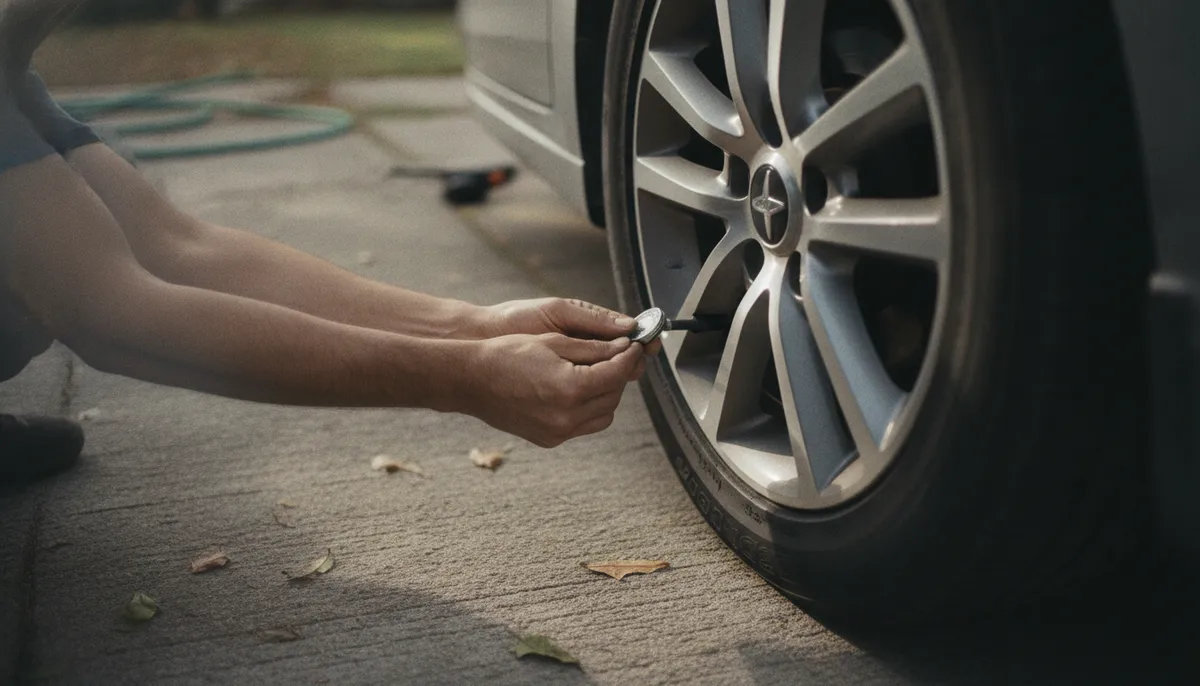
The Tymate TM8 answers both cases for around $50 list as of late 2026, and it spends much of the year discounted near $30. Four sensors screw onto the valve stems in place of the caps, and a small solar charged display shows live pressure and temperature for each tire, with alarms for leaks and blowouts. For a pre-2008 car, that is a slow leak caught in the driveway instead of on the shoulder.
The honest caveats: valve cap sensors are stealable, so this is a poorer fit for street parking in dense cities; the sensor batteries need replacing every year or two; and you have to spin a sensor off every time you check pressure manually. A quality $15 pressure gauge used monthly remains the zero maintenance alternative, and for a garaged newer car it is the better buy.
A $32 translator for the check engine light
The check engine light is the least informative warning in your car, and the $150 diagnostic fee to read it is one of the most resented line items in repair. An OBD2 Bluetooth adapter removes the mystery. The Veepeak OBDCheck BLE costs $31.99 as of late 2026, plugs into the diagnostic port that every car since 1996 carries under the dash, and feeds codes and live engine data to your phone.
Read the code before you call the shop and the conversation changes. A loose gas cap code costs nothing. A misfire code tells you which cylinder. You still cannot fix most of it yourself, and that is the honest limitation: this is information, not repair, and the best phone apps for it cost another $5 to $10 on top of the adapter. Veepeak's BLE+ version at around $42 adds compatibility with brand specific apps like BimmerCode for people who want to tweak settings on German cars. For everyone else the base model is the right buy, and it lives in the port permanently, drawing nothing meaningful.
A battery monitor that predicts the no-start morning
Car batteries rarely die without warning; they die without anyone watching. Cranking voltage sags for weeks before the morning the starter finally clicks. The Ancel BM200, around $35 to $40 as of late 2026, clamps onto the battery terminals in two minutes and logs voltage continuously to a phone app, including a cranking test every time you start the car. When the graph starts trending down, you replace the battery on a Saturday you chose, at a store you chose, instead of in a parking lot at night through a roadside service.
Limitations, honestly stated: it monitors, it does not test capacity the way a shop's load tester does, so treat its verdicts as an early warning rather than a diagnosis. The alerts arrive when your phone is near the car, not across town. And its standby draw, while tiny, is one more thing on a battery that already runs a clock and an alarm. For a daily driver the draw is irrelevant; for a car parked for months, use a trickle charger instead, which is a different purchase solving a different problem.
Wireless Android Auto for the car that almost has it
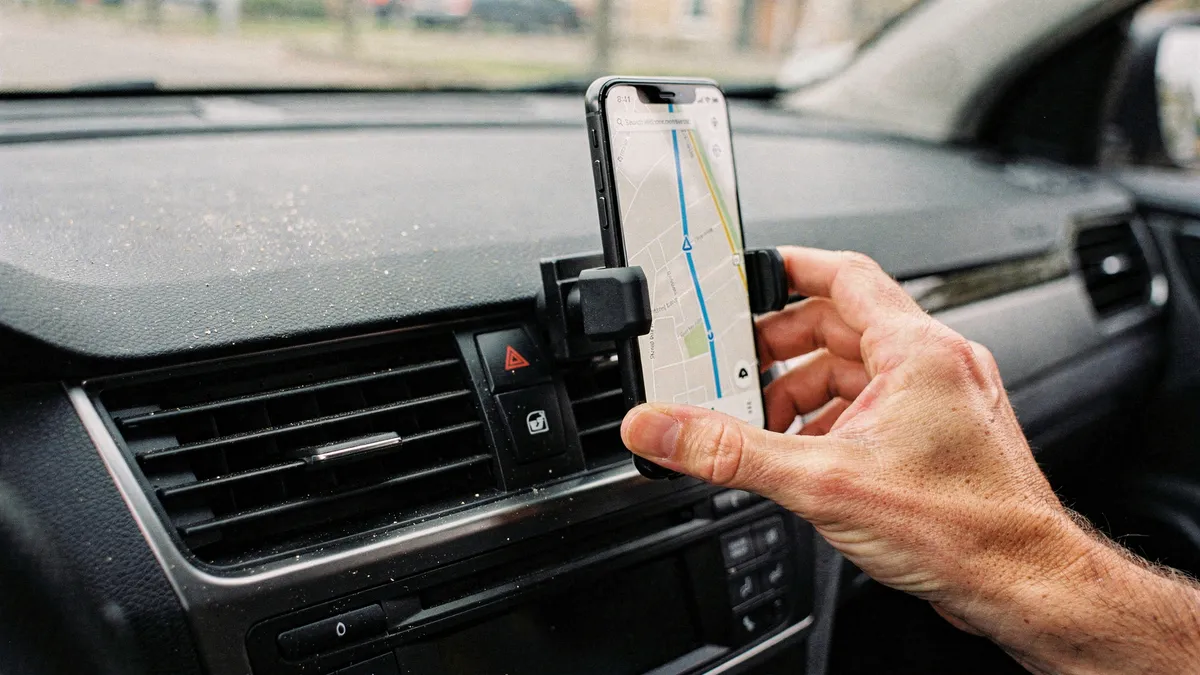
A huge population of cars from roughly 2016 to 2022 supports Android Auto or CarPlay, but only through a cable. The result is a small daily ritual of plugging, unplugging, and replacing frayed cords. The AAWireless TWO, $64.99 as of late 2026, plugs into the USB port once and stays there, letting the phone connect from your pocket. The TWO+ variant at $69.99 handles both Android Auto and CarPlay, which matters in two-phone households.
This is the most optional pick on the list, and the caveats are real: the connection takes ten seconds or so after startup, occasional firmware quirks require an app update to fix, and if your car lacks wired Android Auto entirely, no adapter can add it. But of everything here, it is the one owners describe as changing how the car feels every single day, and at $65 it costs less than a tenth of the head unit swap it replaces.
The charger, since someone has to say it
The cigarette lighter adapter that came free with something in 2019 is why your phone arrives at 40 percent. A modern dual port USB-C charger from a reputable brand such as Anker or Ugreen runs $15 to $25 as of late 2026, charges a current phone at full speed, and stops the slow accumulation of cables and adapters in the console. There is nothing else to say about it, which is rather the point. Buy a decent one, buy it once.
The order that makes sense
If the car is older or the family fleet includes one that is, the tire monitor and the battery monitor come first, because they address the two failures most likely to strand someone. The OBD2 adapter is next, since $32 buys leverage in every future repair conversation. The wireless adapter and the charger are comfort purchases, worth it exactly in proportion to how much time you spend driving.
All five together cost around $200 at late 2026 list prices, and realistically less with ordinary discounts. That is roughly one diagnostic fee plus one tow. The gadget aisle is mostly clutter, and we will keep saying so, but this particular shelf earns its space.