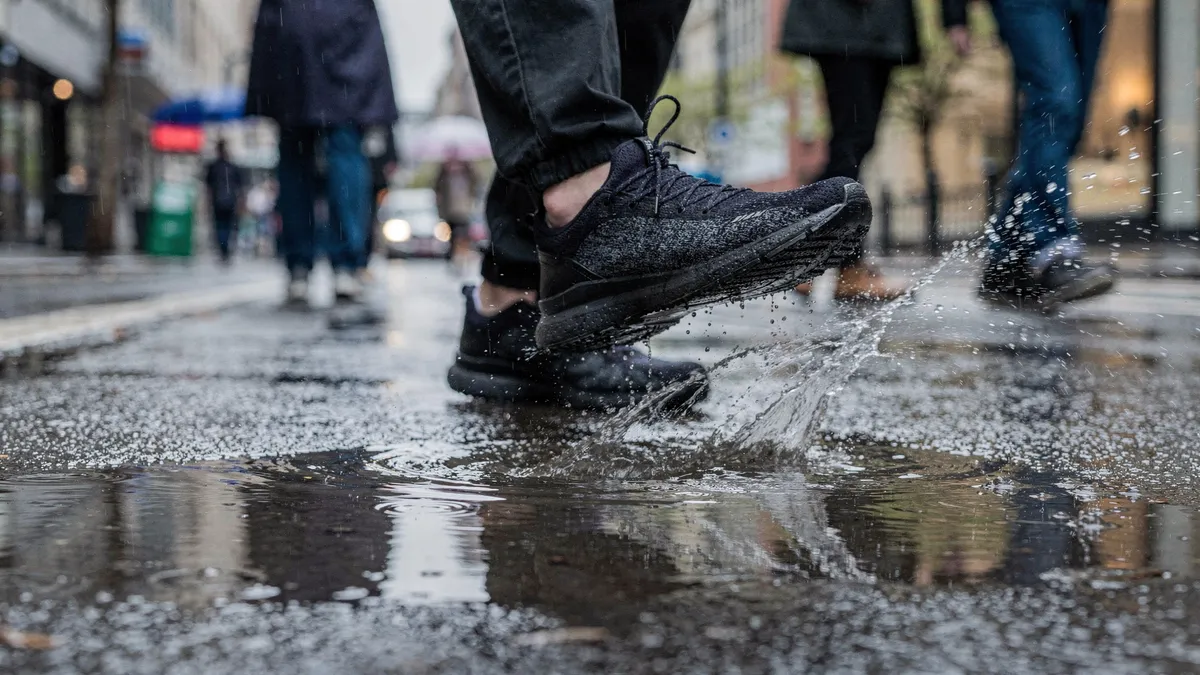
Commuting in the rain is its own discipline. Hiking rain shells are built for people who will be outside for six hours; you need something that survives fifteen wet minutes between the train and the office, then looks reasonable hanging on the back of a conference room chair. Those are different jobs, and plenty of expensive jackets fail the second one.
Below are seven raincoats that are actually sold right now, spanning roughly $70 to $500, with honest notes on what each one gives up. Casual Findings does not run a gear lab; these picks come from comparing manufacturer specifications, current retail pricing, and broad patterns in public owner reviews, with an eye specifically on how each coat behaves over office clothes.
The budget tier: under $100
Columbia Watertight II
The Columbia Watertight II is the default answer for anyone who wants a dependable waterproof layer without thinking hard about it. It uses Columbia's Omni-Tech waterproof-breathable fabric, packs into its own pocket, and lists at around $70 to $90 as of mid-2026, with frequent discounts below that. It is the right coat for the commuter who keeps a just-in-case layer stuffed in a work bag. The limitation is presentation: it looks like exactly what it is, an athletic rain shell, so it pairs better with a backpack than a blazer, and the 2-layer fabric can feel clammy on humid days.
Uniqlo Blocktech Parka
Uniqlo's Blocktech line is the budget pick for people who care how the coat reads indoors. The cut is clean and quiet, closer to streetwear than trail gear, and the fabric blocks wind and rain well for the roughly $70 to $80 it typically costs when in season as of mid-2026. It is a favorite of city commuters precisely because nothing about it says "gear." The honest caveats: the water-repellent coating wears down with use and needs occasional reapplication, seasons sell out, and it is rain-resistant commuter wear rather than a coat for standing in a downpour watching a soccer game.
The mid tier: $100 to $200
Marmot PreCip Eco
The PreCip has been the entry point to serious rain protection for two decades, and the current Eco version keeps that role at around $120 as of mid-2026. Taped seams, pit zips for venting, a stuffable design, and a recycled-nylon face make it the most jacket per dollar in this group. It is best for the commuter whose route includes real weather exposure, a bike leg, or a long walk. The trade-off is the fabric: the 2.5-layer construction that keeps it affordable also makes it the clammiest of the mid-tier picks when you work up any heat, and the styling is unmistakably outdoorsy.
Rains Jacket
Danish brand Rains attacks the problem from fashion rather than function. Its rain jacket line is built from a matte polyurethane fabric that is flatly waterproof, drapes like a minimalist mac, and looks intentional over office clothes in a way no hiking shell can. Most styles run around $125 to $150 as of mid-2026, with longer commuter-friendly cuts available. This is the pick for the design-conscious commuter in a wet city. The limitation is physics: PU fabric does not breathe, so on a warm day you will feel like the inside of a lunch bag, and the smooth finish shows scuffs from bag straps over time.
Patagonia Torrentshell 3L
The Torrentshell 3L is the most recommended rain jacket in the outdoor press for a reason: 3-layer waterproof construction at a price, around $179 as of mid-2026, that undercuts most 3-layer rivals by a wide margin. It vents well through pit zips, handles sustained rain that would overwhelm cheaper coats, and Patagonia's repair program means it can be a decade-long purchase. For a commuter, it is the do-everything choice that also covers weekend hikes. The honest limitation is bulk and register: it is a sturdier, crinklier shell than the city-focused picks here, and over tailored clothing it reads as what it is, which is outdoor equipment.
The investment tier: $200 and up
Stutterheim Stockholm
The Stutterheim Stockholm is the classic rubberized raincoat done straight: matte rubberized cotton, welded seams, snap closures, and a boxy Scandinavian silhouette that looks as good with a suit as with jeans. It typically costs around $300 as of mid-2026. It is the choice for the commuter who wants one beautiful raincoat rather than a technical wardrobe. The limitations are the material's nature: it is heavier and stiffer than synthetic shells, unlined versions run cold in winter, and like all rubberized coats it does not breathe, so it is a coat for walking through rain rather than rushing through it.
Arc'teryx Beta LT
At the top of the range, the Arc'teryx Beta LT is a Gore-Tex shell with the cleanest construction in the business: minimal seams, a precise fit, and weather protection that shrugs off anything a commute can produce. It typically sells for around $450 to $500 as of mid-2026. The people it makes sense for are those who genuinely live in rain, think in cost-per-wear across a decade, and want one shell for commuting, travel, and mountains alike. The honest question is whether a commute justifies it, because for fifteen-minute exposures the Torrentshell delivers most of the function for roughly a third of the money, and the technical look is not everyone's office aesthetic.
Commuter details that matter more than the spec sheet
- Length beats features. A coat that ends at your waist keeps your shirt dry and soaks your trousers. For office wear, thigh-length cuts like the Rains and Stutterheim styles protect more of what people actually see.
- Check the hood over headphones. A hood that will not fit over what you actually wear on your head, or that blocks side vision while cycling, becomes a hood you never use.
- Bag straps eat coatings. A daily shoulder bag or backpack abrades water-repellent finishes at the shoulders first. This is normal wear; a wash and a spray-on refresher restores most synthetic shells.
- Ventilation is comfort. If your commute includes stairs, platforms, and speed-walking, pit zips or breathable fabric matter more than an extra column of waterproof rating.
One coat honestly covers most people: the Torrentshell if function leads, the Rains if style leads, the Watertight II if budget leads. Buy for the commute you actually have, and let the weekend gear be a separate decision.