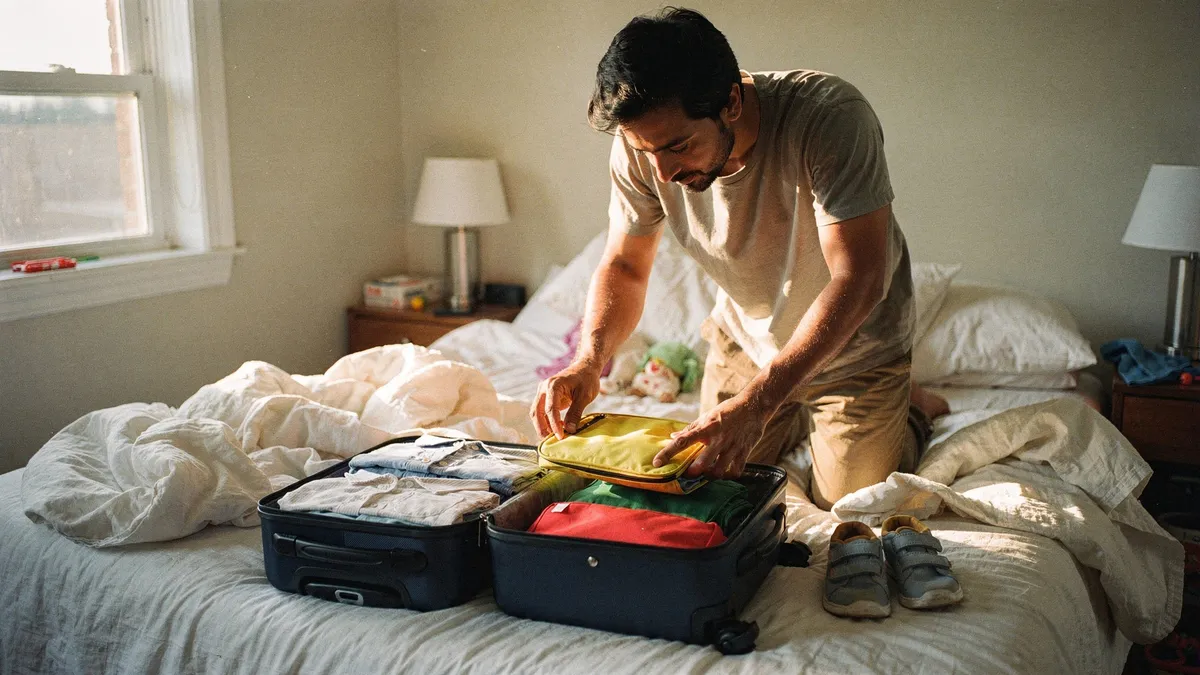
Getting your family's gear organized before leaving for vacation will save time at the airport and in your hotel. Consider checking less luggage and using packing organizers to maximize the contents of your carry-on bag.
Packing Organizers For Family Vacations: How Packing Organizers Streamline Getting Ready for a Trip
Think ahead and pack according to how much clothing and gear your family will realistically need on vacation. Divide clothes and accessories by outfit, using packing cubes or large resealable plastic bags so everything stays organized. You might even consider color-coordinating to make finding things easier.
Be sure to pack any medications, prescription or otherwise, in your carry-on bag. Also consider stowing a change of clothes in your carry-on in case your checked luggage is lost or delayed.
Preparing Snacks, Toys - and Diapers for Airport and Plane Trips
If you'll be flying with formula or water, pack these in quantities your baby is likely to consume. These liquids will need to be screened separately at the security checkpoint.
Consider freezing the bottles the night before to ensure they stay cool. Breast milk is screened at the security checkpoint like other liquids, gels, and aerosols.
Check with your airline regarding the storage of refrigerated or frozen items on board the aircraft. If you have a connecting flight, find out if refrigeration is available.
Remember to remove shoes easily from your bags for screening. Keep sandals - sneakers, and boots in separate areas to expedite the process. Be sure socks and shoes match so you can quickly locate them.
Toys, books, games, and music or video players can help pass the time in the airport and during the flight. Be sure to pack quiet toys and games to avoid disturbing fellow passengers. Consider limiting the number of toys in your bag to those that can occupy your child for the duration of the trip.
Remember that liquids brought onto the aircraft must conform to the 3-1-1 liquids rule. This includes drinks such as juice or water - as well as gel crayons and markers. Remember to remove liquids from your bag for screening at the checkpoint.
For younger children, bring along plenty of wipes and diapers, and consider talking with your pediatrician about bringing oral rehydration solutions. Check with your airline regarding the storage of refrigerated or frozen items on board the aircraft. If you have a connecting flight, find out if refrigeration is available.
Staying Warm, Managing Electronics - and Charging Devices
Even if traveling to a warm climate, consider bringing at least one sweater or sweatshirt for cooler temperatures in airplane cabins and air-conditioned buildings. Earplugs and eye masks can help adults sleep on the plane and manage light and noise in shared hotel rooms.
For multi-day trips, consider purchasing portable power stations to charge devices. Recharge the station before departure. Consider purchasing USB wall adapters to allow family members to plug in multiple devices.
Be sure to remove laptops, tablets, and e-readers from your bag for X-ray screening. We recommend placing these items on the belt conveyor after removing other items so they can be screened as quickly as possible. Consider wrapping headphones and cords around devices to reduce tangling. Keep chargers - converters, and surge protectors easily accessible in your carry-on bag.
Remember that spare batteries and power banks belong in your carry-on bag. Check with your airline regarding the maximum watt-hour rating of power banks allowed on board the aircraft. For international travel, check the international battery restrictions web page for details on batteries and devices.
Protecting Valuables With TSA-Approved Locks
Consider using a shoulder bag or backpack with multiple compartments to keep money, medications, personal documents - and electronics secure. TSA screens approximately 3.3 million carry-on bags and 1.3 million checked bags for explosives and other dangerous items daily. To better facilitate bag inspections, we encourage passengers to pack soft-sided luggage with zippers rather than hard-sided bags with combination locks.
If you choose to use a lock on your luggage, be sure to use either a TSA-approved lock or a lock with a combination dial. TSA has been provided universal "master" keys under agreements with Safe Skies Luggage Locks and Travel Sentry so that certain branded locks may not have to be cut to inspect baggage. Because of evolving threats, TSA adjusts processes and procedures, and travelers may notice changes in procedures from time to time. TSA will open only bags necessary to resolve alarms and inspect baggage.
TSA officers close bags after inspection and secure them with a Transportation Security Administration Bag Inspection Notification. This card states that the bag was inspected and provides a customer service telephone number for further assistance. If you believe something is missing from your bag after you have been through the security checkpoint - please contact your airline.
A Final Checklist Before Boarding Your Flight
Double-check that you've locked any valuables in your checked luggage. Double-check that you haven't left any items on the X-ray belt or behind in a bin. Make sure that all members of your party have their identification ready before approaching the security checkpoint.