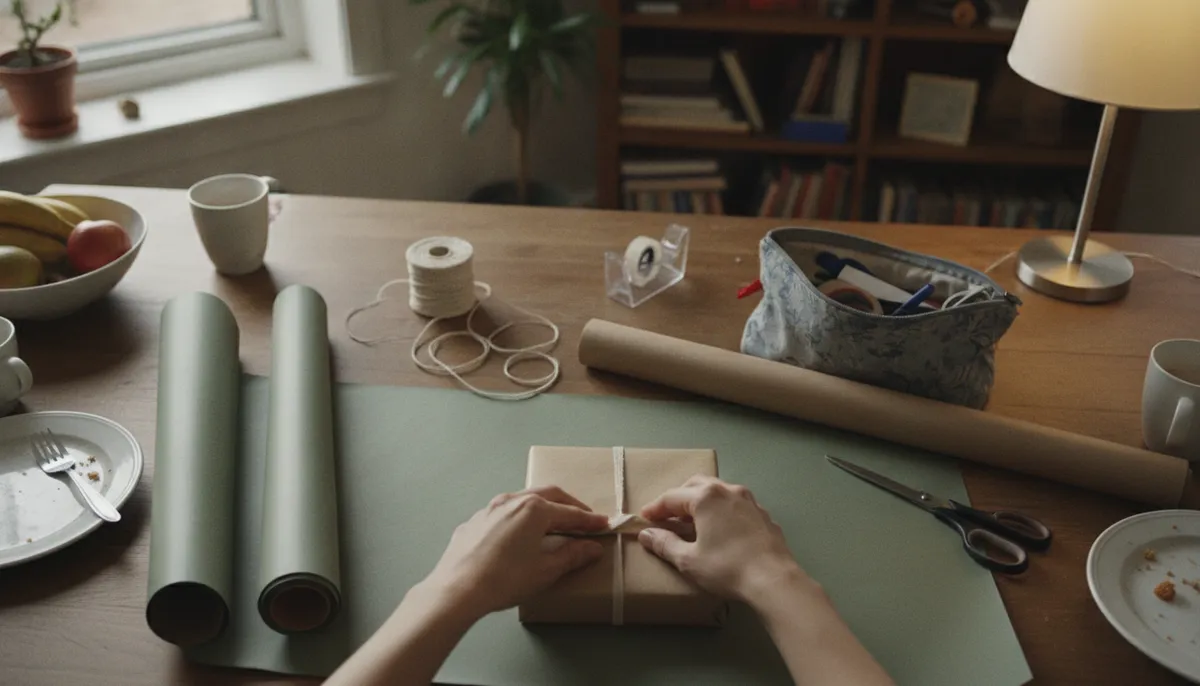
A gift wrap station is one of those projects that Pinterest has inflated into furniture. You do not need a peg wall, a ribbon carousel, or a dedicated craft room. You need six things that live together in one container, so that on the night before a birthday party you are wrapping in ten minutes instead of hunting tape through three drawers. Here is the whole list, priced honestly, with a running total of about $60 at list and usually less in practice. Prices are late-2026 ballparks from public listings; we research listings and reviews, we do not take affiliate money, and every number here will drift a few dollars with sales.
The ledger
- Fiskars Gift Wrapping Set (gift wrap cutter with built-in ribbon curler, plus two tag punches): budget $20
- Scotch Gift-Wrap Tape, 3-pack: around $9
- Two rolls of reversible or kraft wrapping paper: around $12
- Curling ribbon, one big spool: around $4
- Kraft gift tags with string, pack of 100: around $5
- A zippered storage bag to hold all of it: around $10
Running total: around $60 at list, and comfortably under it in practice because the paper, tags, and storage bag rarely sell at list price. If you need to cut to get under budget on a bad day, the ribbon curler built into the Fiskars cutter replaces the ribbon spool's fancier cousins, and the set's corner punch turns leftover paper into tags. More on that below.
One good cutting tool, not three mediocre ones
The single upgrade that changes how wrapping feels is a blade that cuts straight. The Fiskars Gift Wrapping Set is three small tools: a gift wrap cutter with a ribbon curler built into its spine, a corner punch that turns any rectangle of leftover paper into a tag, and a small hole punch for stringing those tags. We budget $20 for it here; it often sells for less, and it is stocked everywhere from Blick to the big-box craft stores. The cutter is the sleeper: it rides the fold of the paper and produces the long clean cut that scissors only manage on a good day. You keep using whatever household scissors you already own for ribbon.
Who it's for: anyone who wraps more than five gifts a year. The honest limitation: the little cutter wants smooth, medium-weight paper. On thin dollar-store wrap it can tear rather than slice, which is one of two reasons the paper line below matters.
Tape you do not have to fight
Scotch's gift-wrap tape is the satin-finish version of the classic dispenser roll, around $9 for a three-pack as of late 2026. It disappears against most paper, and the dispensers mean no lost-end fingernail excavation. We are citing it without a link because 3M's product pages would not load reliably when we checked, and we only link pages we could verify. Any brand-name satin tape in a dispenser does this job; the point is to have three of them so one lives in the station permanently and the borrowed ones eventually come home.
The honest limitation: it is two or three times the price per roll of generic tape, and on kraft paper the finish difference barely shows. If you wrap mostly in kraft, buy generic and spend the savings on ribbon.
Paper: two rolls, both reversible
The trap in wrapping paper is buying it one occasion at a time, forever. The escape is two reversible or double-sided rolls: one in a birthday-neutral pattern, one in kraft or a solid. Hallmark's wrapping paper line is the easy source for reversible rolls, typically around $6 each as of late 2026, and reversible means each roll covers two moods. A kid birthday and a wedding can come off the same spool. Budget around $12 for the pair.
The honest limitation: per square foot, name-brand paper costs noticeably more than discount-store wrap. You are paying for heavier stock that folds crisply and does not tear in the Fiskars cutter, which is exactly the property the cheap stuff lacks. If your household wraps thirty gifts every December, add a third roll bought at the January clearance instead of paying full price in November.
Ribbon and tags: the cheap half that does the impressing
One large spool of curling ribbon, around $4, and a hundred-pack of kraft tags with string, around $5, finish the station. Both are commodity items; buy whichever brand your usual store stocks, which is why neither carries a link here. Curling ribbon shrugs off crushing in a way fabric ribbon does not, and the Fiskars cutter already carries the curler. Pre-strung kraft tags take ballpoint, marker, or a kid's crayon, and they save you from the specific despair of a beautiful package with the recipient's name on a sticky note; the Fiskars punches make them from leftover paper when the pack runs out.
The honest limitation: curling ribbon reads casual. If the gift is for a wedding or a boss, fabric ribbon is the one place to spend extra, occasionally, from the money this list saved you.
The container is the station
Everything above fits in a zippered wrapping paper storage bag, the long under-bed kind with a pocket layer for tools, around $10 as of late 2026. Dozens of near-identical versions exist from brands like Zober and Whitmor, so shop by measurements: it must take 30-inch rolls standing or lying flat, and it must zip fully closed, because an open caddy is how tape escapes. This is the piece people skip, and it is the piece that makes the rest a station instead of a pile.
The honest limitation: a fabric bag protects paper from dust and crushing, not from a flood or a determined cat. If it lives in a damp basement, spend a few dollars more on a lidded plastic bin at the same size and shape.
What did not make the list
- Bows in a bag. They crush into sadness in storage. Curling ribbon makes better ones on demand.
- A dedicated wrapping table or cart. The floor is free and larger than any cart.
- Tissue paper multipacks. Only add tissue once gift bags enter your rotation; then save and reuse the tissue that arrives in gifts to you, which is what everyone secretly does anyway.
- Personalized stamps, wax seals, embossers. Lovely, single-purpose, and the first things abandoned.
Restock is the last honest note: the paper and tape run out, everything else lasts years. Check the bag each November, replace the empty roll at clearance prices, and the station costs almost nothing to keep alive after the first $60.