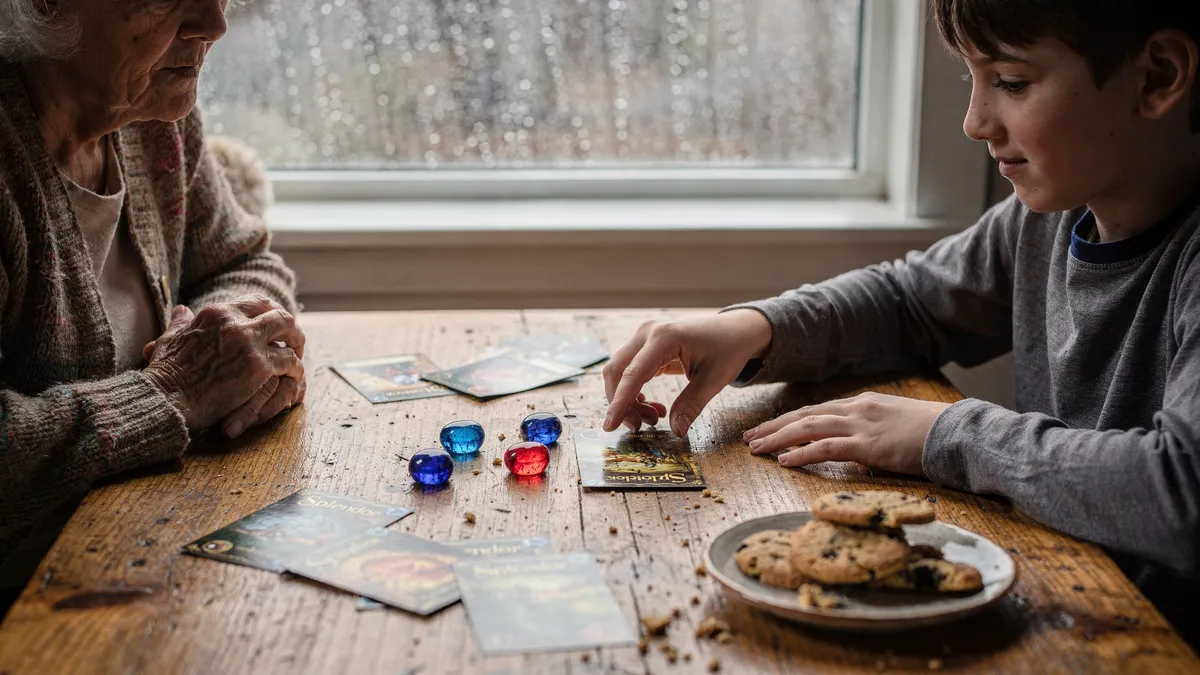
Puzzles aren't just fun but also extremely beneficial for developing problem-solving abilities and other cognitive skills. Critical thinking and problem-solving are some of the most sought-after skills, both in education and in the modern workplace.
What Research Says About Educational Puzzles Supporting Problem Solving
Research shows that puzzle-based activities develop critical cognitive skills including problem-solving, memory, sustained attention, and growth mindset - all of which translate directly to improved academic performance across subject areas. Simple jigsaw puzzles help children develop finger strength - perseverance and problem-solving skills. Children who persevere through difficult problems and build resilience when solving problems benefit throughout their school years and beyond.
A 2018 study published in Frontiers in Aging Neuroscience found that jigsaw puzzling actively recruits multiple cognitive functions, including visuospatial reasoning and working memory, and is associated with greater lifetime cognitive health. Another recent study explored the benefits of puzzle-solving among older adults. A total of 44 participants were entered into the study and randomly assigned to control and experimental groups. The findings revealed that the salivary cortisol and alpha-amylase significantly reduced after playing the game. There were significantly higher levels of attention after playing the game as well.
The Benefits of Puzzle Play for Young Children
Even young children can engage with simple puzzles, building foundational thinking skills early on. Puzzles develop memory skills - as well as an ability to plan, test ideas and solve problems. Puzzle play is a great time to build cognitive and fine motor skills, but it can also be a time to build social, emotional and language skills when caregivers use time with puzzles thoughtfully. Caregivers can provide children with minimal assistance during puzzle play, encouraging them to solve the puzzle mostly on their own - which researchers have shown leads to increased persistence and self-efficacy.
Encouraging children to talk about how they're trying to solve a problem can lead to increased understanding of the problem-solving process. Allowing children to work in groups on puzzles can lead to increases in prosocial behavior and positive feelings towards peers. Asking questions during puzzle play can encourage children to identify and talk about their emotions, as well as learn to recognize the emotions of others. Using puzzles with images related to lesson content can reinforce learning and provide opportunities for discussion and learning new vocabulary.
Types of Puzzles and Games That Support Learning
Puzzles develop essential cognitive skills that align with key learning standards. When students work with puzzles, they engage in critical thinking, problem-solving, and spatial reasoning - competencies directly tied to mathematics - science and reading comprehension. Many puzzles, such as memory-matching games and crossword puzzles, require students to retain and recall information. This process strengthens short-term and long-term memory, which is critical for academic success.
Doing a puzzle requires you to understand the end goal and then work towards it. Completing puzzles successfully often requires planning skills. For example, a common strategy for doing a jigsaw puzzle is to first locate and put down all of the edge pieces. This creates a physical frame that provides structure for completing the puzzle.
Building off of this example - puzzles can also help improve flexibility, the ability to shift perspective, and creativity. Most puzzlers will attempt to fit a piece in a certain orientation. When it doesn't work, they'll try again in a different orientation. In this way, puzzles help us practice laterally thinking and finding multiple solutions to a problem - skills that can be applied to nearly any academic discipline.
Some puzzles even involve numerical reasoning and mathematical operations. For example - Sudoku is a number-based puzzle that requires deductive reasoning to solve. Cryptograms are another type of number-based puzzle. In a cryptogram, each digit in an arithmetic equation is replaced by a letter. To solve the puzzle, the solver must guess which letter represents which digit.
Why Puzzles Remain a Valuable Tool in the Digital Age
As technology continues to advance, it's more important than ever that we help students strengthen their critical and computational thinking skills. While there are many educational video games that build these skills, puzzles remain a valuable tool in the classroom. Importantly - puzzles can be completed collaboratively, which allows students to develop important social and emotional skills. And, perhaps most importantly, puzzles are fun!
References
- puzzles help children develop finger - earlychildhood.qld.gov.au
- were entered into the study - pmc.ncbi.nlm.nih.gov
- essential cognitive skills that align - schoolprograms.academicapproach.com