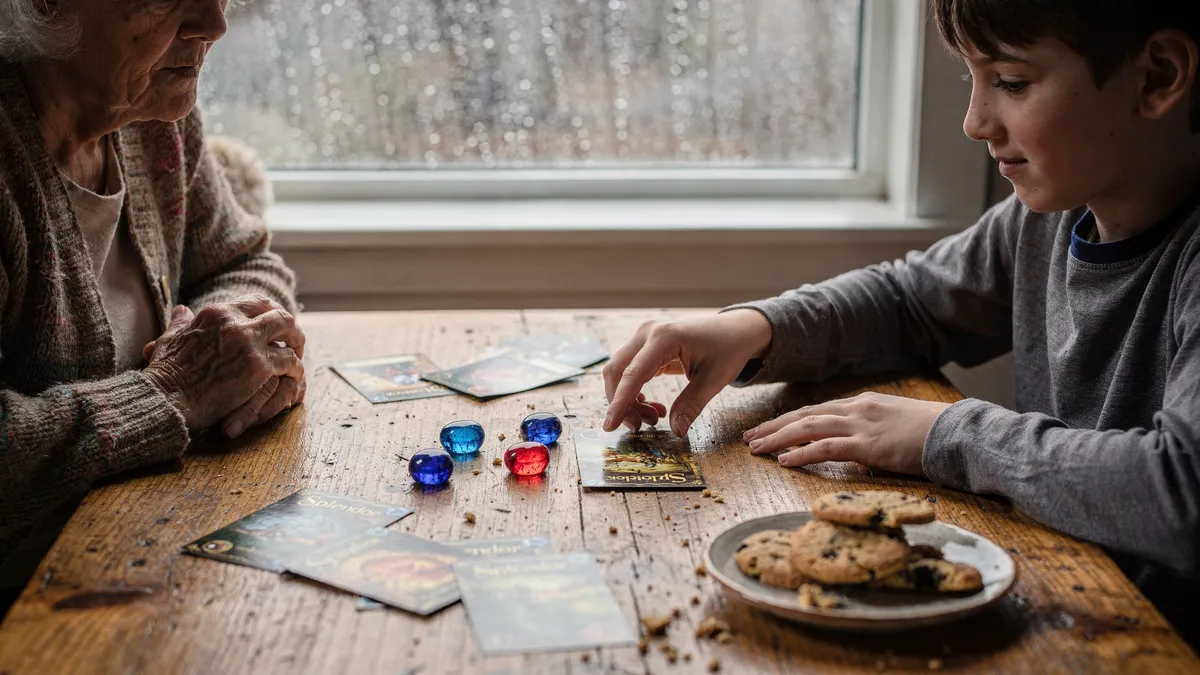
Research shows that limiting screen time for your kids can be beneficial. But with so much entertainment and learning tied up in our devices, how do you occupy kids without a screen? One activity worth trying is a good old-fashioned board game.
Family Word Games For Screen Free Evenings: Why Word Games Deserve a Place at Your Family Table
In 2025, parents are handling a complex digital relationship. Screens serve as education tools, entertainment, and even stand-in babysitters during busy moments. A 2016 survey of Canadian Paediatric Society (CPS) members found that parents sought advice about their children's screen time in four main areas: duration - setting limits, the effects on health and well-being, and optimal content. One way to offset time spent looking at screens is by increasing time spent doing something that requires none. Board games are making a comeback, and for good reason.
Word games are one of those rare categories where fun and learning genuinely overlap. Research consistently shows that kids who play word games develop stronger reading comprehension, better spelling - and more robust vocabularies. Plus, most word games are extremely flexible when it comes to age and skill level, so you can start playing as soon as your kids learn to read.
Classic Word Games for Family Game Night
Everyone knows about Scrabble, but there are plenty of other word games out there, some perfect for mixed-age groups. Many of these games can be played quickly - making them great for busy weeknights.
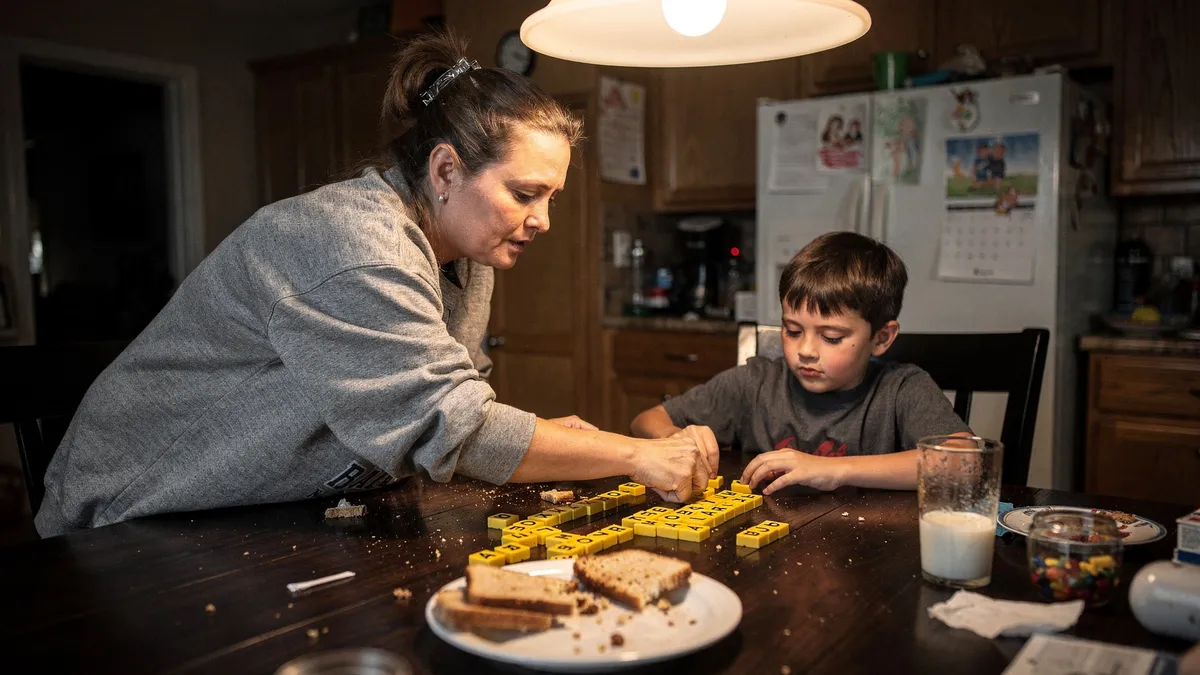
- Bananagrams - Inspired by the classic game of Scrabble, Bananagrams is a fast-paced spelling game for word nerds of all ages. Players draw random tiles from a central pool and use them to create their own unique crossword puzzles. The first person to use all of his or her lettered tiles wins. Bananagrams is incredibly versatile, easily adapting to different age levels by adjusting the number of lettered tiles each player begins the game with.
- Scattergories - Players have a set amount of time to come up with words that fit a particular category, such as things starting with the letter 'A'. Points are awarded for unique answers, so try to stump the other players with obscure choices. This is an especially good game for rainy days - since it only requires a timer, a pencil, and a piece of paper.
- Codenames - Cleverly merging word games with logic puzzles, Codenames challenges two opposing teams to guess as many of their secret agents' codewords as possible. Spymasters provide one-word clues that correspond with multiple agents on the board, along with a number indicating how many guesses to make. Teammates then attempt to correctly identify their agents before accidentally choosing an enemy agent or the game-ending assassin. While this game can be difficult for younger players - it provides a low-stakes environment for learning critical thinking skills.
- Pictionary with a Twist - Who says you have to draw pictures? Try describing a word or phrase without saying it, acting it out with your body, or spelling any of its letters. You can also play with a twist by requiring players to provide a synonym or antonym of the word they're drawing, or to only use a certain number of lines or shapes.
- Apples to Apples Junior - This card game features two decks: red cards with nouns printed on them, and white cards with adjectives. Each player receives a hand of red cards and then one white card is placed in the middle for everyone to see. Players then choose a red card from their hand that they believe best fits the white card - and the player chosen as judge for that round picks his or her favorite combination. Simple yet surprisingly deep, Apples to Apples is great for jump-starting creativity.
What you have to understand is that a common mistake families make is picking a game that is too long or too complicated for the youngest player at the table, and so the youngest player gets bored or frustrated and the whole evening falls apart. The fix for this is to check the suggested age range on the box before you sit down, and then adjust the rules a little bit to make things easier for younger kids, so everyone stays in the game longer. Keep in mind that shorter games work better on weeknights because you can finish a full round before bedtime and your kids still feel like they completed something.
What you have to understand is that a common mistake families make with tile-based games like the ones listed above is that they try to play by the full adult rules right away, and so younger kids feel overwhelmed and want to stop. The fix for most families is to start with a smaller set of tiles or a shorter word list and then add more difficulty once your kids feel comfortable, and that way the game stays fun instead of turning into a frustration. Keep in mind that the goal on a screen-free evening is to keep everyone at the table, not to play the game the exact right way.
Word Games That Build Skills Beyond Spelling
One of the biggest benefits of limiting screen time for kids is forcing them to find new ways to entertain themselves. This is why many educators advocate for allowing kids to play games, because doing so teaches important "soft" skills such as communication, planning, and problem-solving.
Data from the University of Florida found that kids who practice these skills with their parents end up having better memory techniques and more success at solving all sorts of problems on their own. There's some evidence to support the use of abstract strategy games such as Chess or Go in improving attention in children with ADHD by activating this frontal brain region. So next time your child asks for your help with homework - consider sitting down together to play a few rounds of chess. It might just give them the mental boost they need to tackle their algebra homework on their own.
The simple fact is that a lot of parents focus only on spelling when they think about word games, but word games also ask kids to hold multiple words in their head at once, to take turns, and to think before they speak, and all of those things are general thinking habits that carry over into school. What you have to understand is that the benefit here is not just about vocabulary and vocabulary alone, it is also about the habit of sitting with a problem for a few minutes before giving up, and that habit takes time to build. Keep in mind that younger children may need a grown-up to play on their team at first so they do not feel left out, and that is fine and it does not make the game less useful for them.
On top of that, a common mistake is treating every round as a teaching moment and correcting your child every time your child makes a spelling error during the game, and so the child starts to feel like it is school and not a game. What you have to understand is that letting small errors go during casual play is fine for most families, because your child is still practicing the habit of forming words and thinking about language, and that habit matters more than perfect spelling in the moment. The fix is to save any corrections for after the round is finished, and even then to keep it brief and low-key so the good feeling of the evening stays intact.
Tips for Making Family Game Night Work
Just as kids don't instantly love broccoli, they may take some time to warm up to board games. Be prepared to play a few times before your children fully get the hang of things. And while losing is an important life lesson, it's also a surefire way to turn kids off from playing again. Consider implementing a "no gloating" policy, where the winner of each game keeps his or her victory quiet until the end of the night, or only after the loser has had time to win another round.
Also - keep in mind that older siblings may need to adjust their strategies in order to compete with younger brothers and sisters. This can be difficult for some kids, but learning how to modify their approach to a problem based on the competition is another important "soft" skill.
The simple fact is that a common mistake is trying to make game night happen every single night right away, and so the whole thing starts to feel like a chore instead of something fun, and then kids resist it. A better approach for most families is to pick one or two nights a week and keep those nights consistent, so your kids know what to expect and they start to look forward to it. On top of that, letting your kids pick the game sometimes gives them a feeling of ownership over the evening, and so they are more likely to stay engaged all the way through.
Keep in mind that a common mistake is introducing a new and complicated game on the very first game night, and so the evening gets bogged down in reading instructions and nobody actually plays very much. A better approach for most families is to start with a game that at least one person already knows, so that person can explain the rules out loud in plain language and the game can start quickly. On top of that, putting away phones for the adults at the table matters just as much as keeping screens away from the kids, because your kids notice when you are only half paying attention and it sends a message about how much the evening actually matters to you.
What People Get Wrong
A lot of people think word games are only useful for kids who are already good at reading, but the simple fact is that even kids who are still learning to read can join in if you adjust the rules a little bit, so do not rule a game out just because your child is not a strong reader yet. People also think that winning and losing is the whole point of game night, but what you have to understand is that the conversation that happens while you are playing is often more valuable than who ends up with the most points, and so it is worth slowing down and talking during the game. Another thing people get wrong is thinking that game night has to be long and elaborate, but most word games work just fine in a short window of time and a short game is still a real game. Keep in mind that some parents feel pressure to be the best player at the table, but letting your kids beat you sometimes is not a bad thing and it keeps them coming back to play again.
What This Does Not Cover
This article talks about word games as a general activity for most families with kids who are at a typical reading and language level, and so the advice here does not automatically apply if your child has a language processing difficulty, a reading disorder, or other learning differences that affect how your child handles word-based tasks. The simple fact is that if your child finds word games very frustrating in a way that goes beyond normal beginner difficulty, it is worth talking to your child's teacher or a learning specialist before pushing the activity further. On top of that, this article does not cover how to handle situations where family conflict makes game night stressful rather than fun, and if that is happening in your home it is worth getting some outside support rather than relying on game night to fix it.
References
- shows that kids who play — screenwiseapp.com
- Bananagrams - Inspired by the classic game of Scrabble, Bananagrams is a fast-paced spelling game for word nerds of all ages. Players draw random tiles from a central pool and use them to create their own unique crossword puzzles. The first person to use all of his or her lettered tiles wins. Bananagrams is incredibly versatile, easily adapting to different age levels by adjusting the number of lettered tiles each player begins the game with. — google.com
- Scattergories - Players have a set amount of time to come up with words that fit a particular category, such as things starting with the letter 'A'. Points are awarded for unique answers, so try to stump the other players with obscure choices. This is an especially good game for rainy days - since it only requires a timer, a pencil, and a piece of paper. — google.com
- Codenames - Cleverly merging word games with logic puzzles, Codenames challenges two opposing teams to guess as many of their secret agents' codewords as possible. Spymasters provide one-word clues that correspond with multiple agents on the board, along with a number indicating how many guesses to make. Teammates then attempt to correctly identify their agents before accidentally choosing an enemy agent or the game-ending assassin. While this game can be difficult for younger players - it provides a low-stakes environment for learning critical thinking skills. — google.com
- Pictionary with a Twist - Who says you have to draw pictures? Try describing a word or phrase without saying it, acting it out with your body, or spelling any of its letters. You can also play with a twist by requiring players to provide a synonym or antonym of the word they're drawing, or to only use a certain number of lines or shapes. — google.com
- Apples to Apples Junior - This card game features two decks: red cards with nouns printed on them, and white cards with adjectives. Each player receives a hand of red cards and then one white card is placed in the middle for everyone to see. Players then choose a red card from their hand that they believe best fits the white card - and the player chosen as judge for that round picks his or her favorite combination. Simple yet surprisingly deep, Apples to Apples is great for jump-starting creativity. — google.com