The gym's dirty secret is that a beginner or intermediate exerciser can get most of what they came for with a patch of floor and their own bodyweight. Squats, push-ups, lunges, and planks have carried people to real strength for as long as floors have existed. What follows is a practical, honest guide to training at home with nothing: how to structure it, how to progress when it gets easy, and where the no-equipment approach genuinely runs out of road. The usual sensible caveat applies and is not just legal wallpaper: this is general fitness information, and anyone with an injury, a health condition, or a long break from exercise should get individual guidance from a professional before starting something new.
What counts as enough
For adults generally, the federal Physical Activity Guidelines for Americans describe a weekly pattern of at least 150 minutes of moderate aerobic activity plus muscle-strengthening work on two or more days. Read against that yardstick, three or four half-hour bodyweight sessions a week, with some brisk walking on the other days, is a legitimately complete program rather than a compromise while you save for a gym membership.
The five movement families
Nearly every bodyweight exercise is a variation on five patterns, and a balanced session touches each of them.
- Squat: bodyweight squats, split squats, step-ups to a sturdy chair. Trains the legs' engine.
- Hinge: glute bridges, single-leg bridges, good mornings. Trains the backside chain the squat undertrains.
- Push: push-ups in all their inclines and declines, plus pike push-ups for shoulders.
- Pull: the honest weak spot at home, covered below.
- Core: planks, side planks, dead bugs, hollow holds. Stillness under tension beats endless crunches for most purposes.
Form questions deserve better answers than guesswork, and the free ACE exercise library is a solid reference: each entry demonstrates setup and execution with photos, written by an established certifying body rather than an algorithm.
A starter session that fits in thirty minutes
- Warm up for five minutes: easy movement, arm circles, leg swings, a flight of stairs if you have one.
- Bodyweight squats, three sets of 10 to 15.
- Push-ups at whatever incline lets you complete clean sets of 8 to 12, hands on a counter or the floor as ability allows.
- Glute bridges, three sets of 12 to 15.
- Alternating reverse lunges, two or three sets of 8 per leg.
- Plank, three holds of 20 to 40 seconds.
- Finish with a few minutes of unhurried stretching for whatever feels tight.
Run that three times a week with a rest or walking day between sessions. The right difficulty leaves one or two clean reps in the tank at the end of each set; grinding to collapse is a recipe for skipped Thursdays, and the program you repeat beats the program that flattens you.
Progression: the part most home programs skip
Muscles adapt to what they are asked to do, so a routine that never gets harder eventually becomes maintenance. Without weights, difficulty comes from four dials. Add repetitions or sets week over week. Slow the tempo, especially the lowering half of each rep, which makes fifteen squats feel like a different exercise. Shrink the leverage, moving from counter push-ups toward floor, decline, and eventually one-arm-biased variations. And shift toward single-limb work, where split squats and single-leg bridges quietly double the load per leg. A notebook or phone note tracking last session's numbers is the least glamorous and most effective piece of training technology available at home.
Where no-equipment honestly falls short
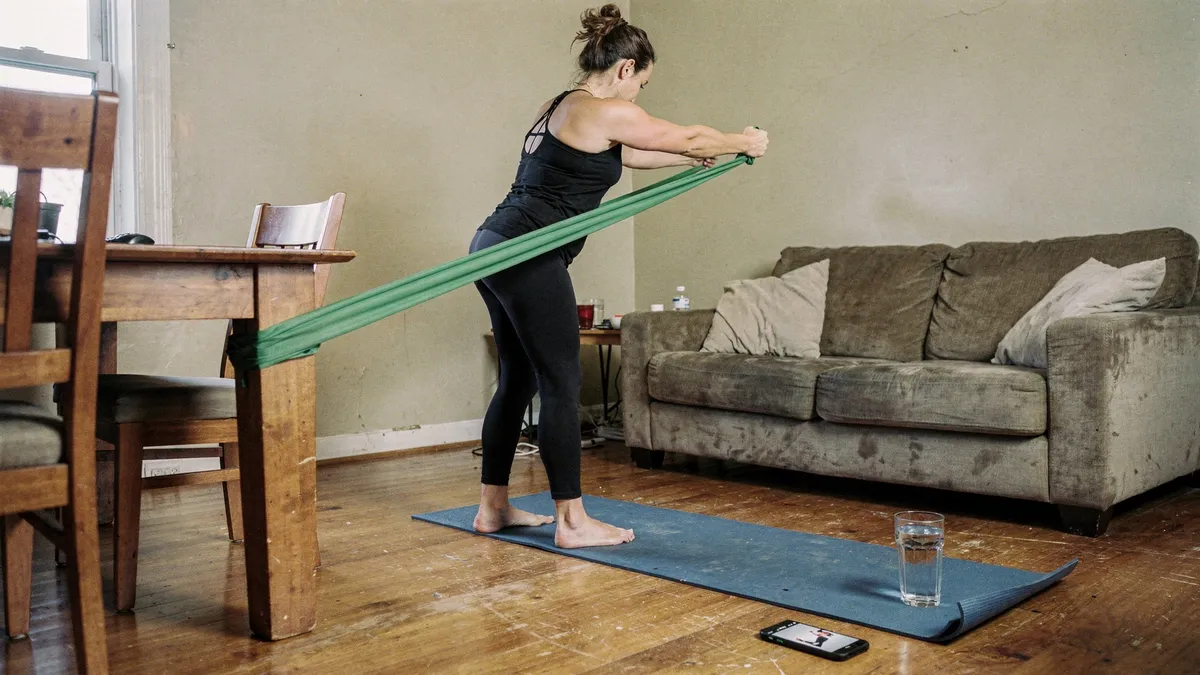
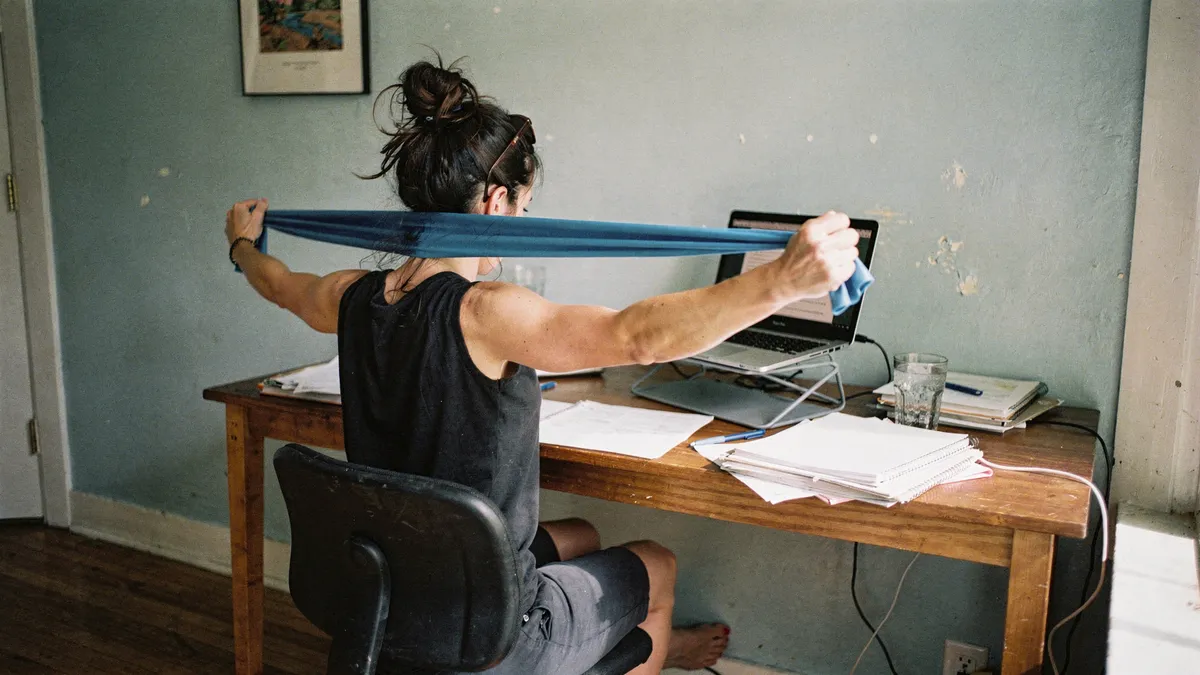
Two limits deserve plain statement. The pulling gap is real: rows and pull-ups need something to pull, and without them the back muscles lag the pushing muscles, which matters for posture and balance around the shoulders. Towel rows using a sturdy door, or backpack rows with a bag loaded with books, patch the gap at zero cost; a doorway pull-up bar, usually $25 to $40, fixes it properly and is the single most worthwhile purchase in home training. Second, advanced strength has a ceiling here: once squats and push-ups run to effortless sets of 25 and up, further gains lean on skill-heavy variations that not everyone enjoys, and a pair of adjustable dumbbells becomes the honest next step. Neither limit matters much in the first year, and the first year is exactly when home training shines: zero commute, zero fee, zero waiting for the squat rack.
Free structure, if self-programming is the obstacle
Plenty of people fail at home workouts for lack of a plan rather than lack of will. Guided sessions solve it, and the free tier of this market is strong. The Nike Training Club app is the standout: a large library of follow-along bodyweight workouts, filterable by length and difficulty, genuinely free without a paywall ambush. Its honest catch is that a coach on a screen cannot see your form, so pairing app workouts with occasional self-checks against a reference like the ACE library keeps sloppy patterns from being rehearsed. YouTube's fitness ecosystem offers the same value with more variance; pick instructors who explain positioning rather than just performing it.
The only piece of gear worth mentioning in a no-equipment article is a mat, purely for comfort on hard floors during planks and bridges. Anything grippy works, including a folded blanket; if buying, basic mats from established makers such as Gaiam commonly run $20 to $40 as of mid-2026. Thicker is kinder to knees and slightly worse for balance work. That is the entire shopping list.
Making it survive week three
Most home programs die around the third week, when novelty runs out before habit arrives. The reliable fixes are unglamorous: train at the same time on the same days so the decision is made once rather than nightly, leave the mat visible instead of stored, and shrink the bad-day version of the workout to ten minutes rather than zero, because a token session keeps the chain intact in a way a skipped one does not. Progress photos and the notebook from earlier help too, since bodyweight strength arrives quietly and the numbers notice before the mirror does.
The honest pitch
Home bodyweight training will not build a competition physique, and it does not need to. What it reliably delivers, done three times a week for a few months, is the difference most people are actually shopping for: stairs that stop being an event, groceries that carry easier, a back that complains less about desk chairs. The barrier to entry is a patch of floor and the next thirty minutes, and the whole experiment costs nothing to run.