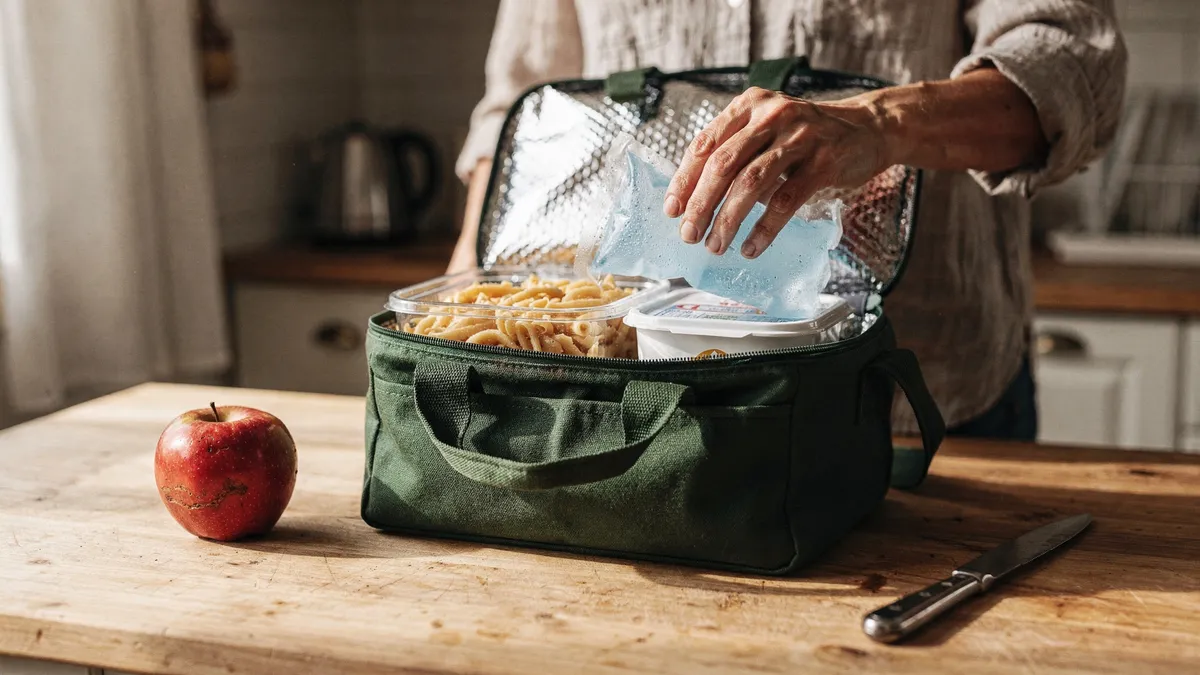
Insulated lunch bags help keep food at a safe temperature until mealtime. They're typically made from cloth with an inner lining of insulation, although some are made out of foam or another type of plastic.
Insulated Lunch Bags For Work And School Meals: Why Insulated Lunch Bags Matter for Food Safety
That inner insulation usually has tiny air bubbles that keep hot foods hot and cold foods cold. Some bags are lined with small ice packs that help keep contents cool.
These bags are popular for brown-bagging lunch to work or school, taking a meal on a road trip, or packing food and drinks for a day at the beach. An insulated lunch bag is a climate-controlled way to transport foods that need refrigeration - think sandwiches, yogurts - milk, baby formula, and leftovers. Insulated lunch bags aren't meant to keep food cold for more than a few hours, however, so it's important to plan accordingly.
The insulation in these bags slows the transfer of heat energy. Heat naturally flows from warmer areas to cooler ones. The insulation reduces the transfer of heat energy - helping to keep cooler items at a lower temperature for a longer period of time.
How Long Foods Stay Cold Inside an Insulated Lunch Bag
That timespan depends on several factors, including the ambient temperature, how much food is inside the bag, and the type of food. According to the USDA, perishable foods maintain safety for only 2 hours at room temperature . Perishable foods are items that spoil quickly if not refrigerated - such as meat, poultry, seafood, eggs, dairy products - and many raw fruits and vegetables.
Foods that are precooked or otherwise prepared should be discarded after sitting at room temperature for more than 2 hours, as they could become contaminated with harmful bacteria. If you're unsure whether you'll be able to eat the food within that 2-hour window, consider packing a frozen meal. Frozen foods will stay safe longer as they thaw.
You can also pack frozen gel ice packs or frozen water bottles with your lunch. These will keep foods cool as they thaw, and by mealtime, the ice packs should have thawed and the water bottle should still be cold. If you pack frozen foods in your lunch bag - make sure they're completely frozen when you put them in the bag.
Also, leave some space between them so that cold air can circulate. Finally, remember that a lunch bag isn't a replacement for a refrigerator. Promptly discard any lunch bag items that are left at room temperature for longer than 2 hours.
Which Foods to Pack and How to Keep Them Cool
When packing an insulated lunch bag, it's best to keep hot foods hot and cold foods cold. You might accomplish this by using separate containers for hot and cold items. Consider using frozen gel packs to keep cold foods cool.
It's also important to keep in mind that dense foods, like thick cuts of meat - retain the cold better than lighter, fluffier foods, like salads. So, if you want to pack a salad for lunch, team it with a frozen gel pack.
Some lunches may not require refrigeration at all. Also - foods that are shelf-stable can be safely stored at room temperature - think peanut butter and jelly sandwiches, shelf-stable soups and dips, and breads and crackers.
Tips for Cleaning and Maintaining an Insulated Lunch Bag
Just as you would wash a reusable grocery bag, it's important to clean an insulated lunch bag regularly. Start by removing any food residue, then wipe the bag with a clean towel soaked in warm water and mild soap (like dish soap).
Rinse the lunch bag with a clean towel soaked in cool water - then allow it to air dry. If you want to add a disinfectant step, you could mix 1 tablespoon of household chlorine bleach in 1 gallon of water. Immerse the lunch bag in the bleach solution for 2 minutes, then allow it to air dry. Alternatively, you could soak a clean paper towel in the bleach solution, then use the towel to wipe down the lunch bag.
Leaky or smashed foods can stain an insulated lunch bag. Prevent stains by immediately cleaning any spills. It's also a good idea to use leak-proof containers - like liddies