Jessica and her husband love growing herbs. They use them in their cooking and can even make their own soap with some of the plants. But since moving into their first home with a yard, they have had a hard time getting outside to maintain the garden.
Why Vertical Planters for Balcony Herb Gardens Work
One of the reasons why vertical gardens work so well for busy herb enthusiasts is because of how easy they can be to maintain compared to a horizontal garden. All you need is a planter or two, a sunny balcony, and the motivation to learn how to use your herbs in cooking.
Plus, vertical gardens can fit in small spaces. "I think that's one of the great things about container gardening -" says Sam Earnshaw, the creator behind the YouTube channel The Container Garden. "If you live in a high-rise, have a small porch or patio, or would rather keep gardening close to the house, container gardens are a great solution." This can also prevent any issues with gardening on landlord property.
What to Consider Before Starting Your Vertical Planter
You may love the idea of growing your own herbs - but before starting a garden, there are some factors to consider. While container gardening can fit into a small space, you still need to take into account how much sun the area gets. Most herbs require between six and eight hours of direct sunlight a day, so if your balcony tends to be shady throughout the majority of the day, you may want to reconsider your plant selection.
Instead of giving up on your herb garden dreams - look into plants that thrive in the shade, such as basil, chives, tarragon, parsley - cilantro, fennel, mints, oregano, and thyme. "I think that lighting is probably the most important consideration when setting up a container herb garden -" Earnshaw explains.
Another important consideration is wind. If your balcony experiences heavy gusts, look for a cover or awning to protect the herbs. You may also want to consider purchasing a trellis to help protect the plants from the wind.
"I'd recommend using a good quality soil," Earnshaw says. "The cheapest soil you find at the local big box store may end up costing you in the long run." Instead, look into soils labeled for container use and that contain mycorrhizae, which help deliver nutrients to plants.
Earnshaw suggests using compost instead of fertilizer for a couple of reasons. First - the timing of fertilizer can be tricky and can damage plants if overdone. Second, compost promotes the growth of beneficial bacteria and fungi in the soil, which promotes healthy root systems.
How to Assemble a Vertical Herb Planter
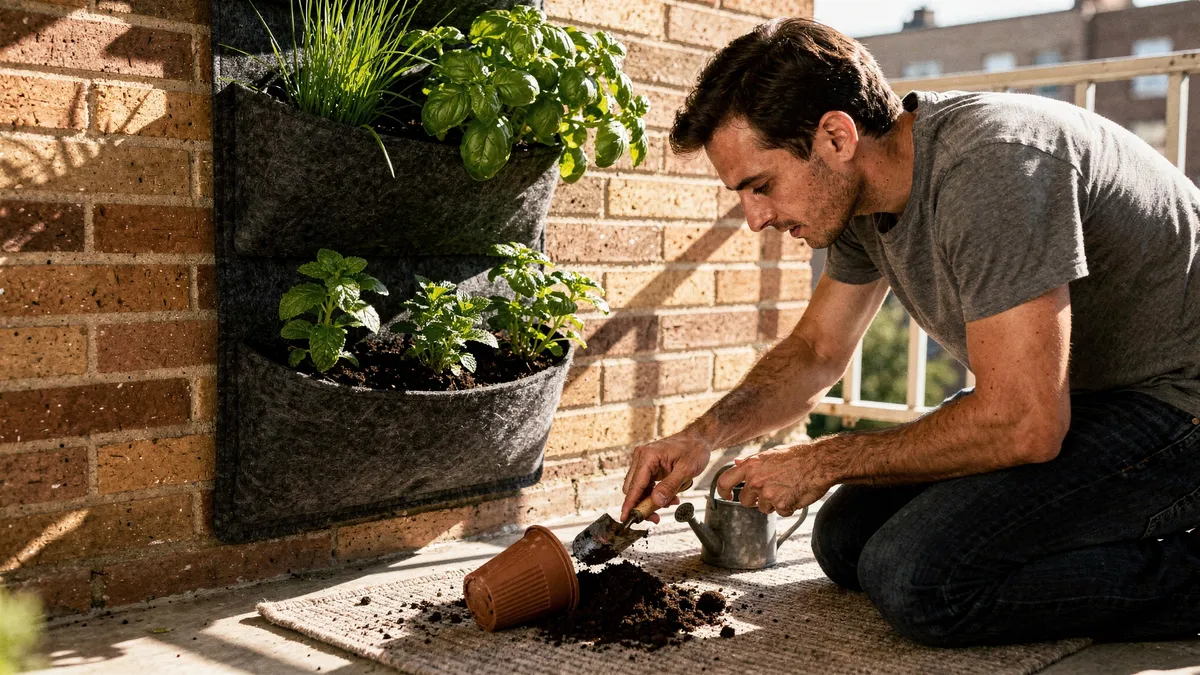
Making a vertical garden doesn't have to be difficult. You can purchase a trellis, an herb planter, some screws or anchors - a drill, and silicone caulk.
- Clean the wall where you plan to hang the trellis to remove any dirt or debris. Measure the width of the wall and mark the middle; this will be the center of your first trellis.
- Measure 18 inches above the ground and make another mark. This will indicate where to hang the trellis and ensure that it's level.
- Position the trellis on the wall, overlapping the marks you made. Drill into the top and bottom of the trellis' vertical supports. Screw in the wall anchors and wall hooks.
- Using silicone caulk, attach the trellis to the wall hooks. Repeat steps three and four to install the second trellis. Position the second trellis approximately 4 feet from the first.
- Hang the herb planter on one of the trellises. Plant herbs in the pockets of the planter.
- Use S-hooks to hang planters from the trellis' crossbars. Fill planters with soil and plant herbs.
Troubleshooting and Tips for a Successful Vertical Garden
While the idea of a vertical garden sounds convenient, there are a few issues that could arise. For example - water tends to run down the wall it's attached to, which may cause plants located below others to drown. To fix this, add a trough beneath each planter to collect the water.
Another issue is properly securing the trellis to the wall. If the trellis isn't attached correctly, it can pull away from the wall or even fall down entirely. Make sure to use wall anchors in addition to nails or screws to secure the trellis to the wall.
Finally, gardening in small spaces may require a little bit of creativity. There are many ways to garden on a balcony - and a vertical herb garden is just one of many options. Just be sure to take into account the amount of sunlight, wind, soil, and water before beginning any new garden.
"All gardens - big or small, on the ground or on the wall - require time - attention, and maintenance," Earnshaw says. "But I think the effort required to maintain a garden of this scale is reasonable."