Keeping track of all the snacks and condiments you stockpile can be difficult. One organizer explains how stackable pantry bins can help you keep your cabinets organized.
How Stackable Pantry Bins for Cabinet Organization Work in Practice
Late last summer my family suffered through a particularly miserable month. My daughter had surgery, then my son got sick, and then I got sick. During that time, I didn't do a very good job keeping track of what we had in the pantry versus what we needed to restock.
By the end of the month, things were in disarray. We had a half-empty bag of flour that was about to go bad - a ton of bread that also needed to be used up quickly, and way too much breaded chicken that nobody wanted to eat anymore. We couldn't see what we had, which meant we weren't eating what we had, which led to purchasing more of what we didn't need.
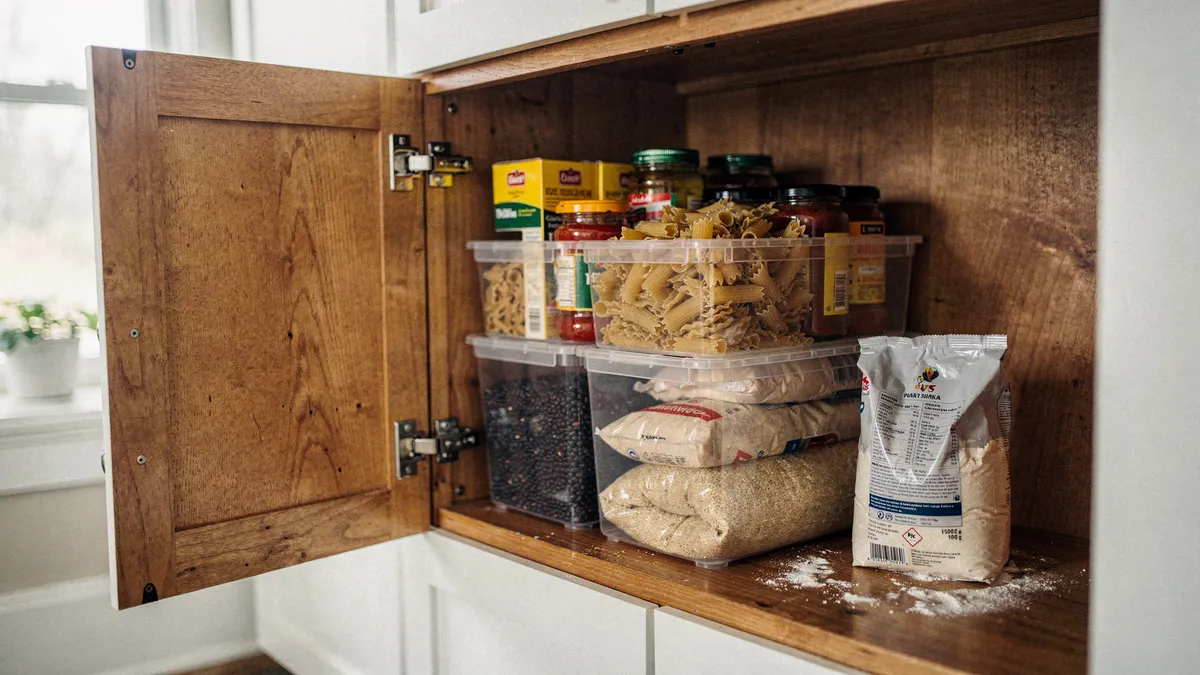
The problem would have been a lot easier to solve if our pantry were divided into sections with stackable bins. You know the ones: Those clear plastic containers that allow you to store pasta, rice - and beans neatly without taking over the cupboard. They're not just for pantries though. Here's how to use them to organize your kitchen cabinets, too.
Why Bins and Baskets Are a Pro Organizer's Favorite Pantry Storage Idea
When it comes to pantry storage, there are a good deal of fancy options out there. But bins and baskets are probably the most efficient and cost-effective, says Alexandria Jones, a professional organizer in Charlotte - North Carolina. Not only do they protect items from dust, they can also prevent a full shelf from toppling over when you reach for something in the back. Plus, they're easy to clean.
You can use bins for everything from chips and crackers to cutlery and silverware. Baskets can even double as trays for bringing snacks into the living room. There are lots of options out there, so what's the best pantry bin for you?
I'm a big fan of clear bins because I like being able to see what's inside. And while I've bought a few bins with labels printed on them, I prefer the ones where I can add my own labels using washi tape or a whiteboard marker. I know that might seem like a pain - but trust me, it's satisfying.
What to Know About Materials and Sizes
In the world of plastic, there are a variety of options. You want to look for polypropylene or BPA-free plastic. Polypropylene is a common BPA-free plastic used for food storage containers, and it's translucent. Previously - polycarbonate was a widely used plastic for food storage containers, but it's less common due to concerns that the bisphenol A (BPA) it contains can cause disruptions in hormonal activity if the plastic degrades.
I personally like to mix and match sizes of bins, going from 6 quarts at the top to 56 quarts at the bottom. A 6-quart container can comfortably fit a standard 5-pound bag of flour. But I find smaller bins are better for lighter items like silverware since they're easier to lift. The IKEA SAMLA 6-gallon bin is about the same size as the Container Store's Deep Sweater Box but costs less.
For heavier items, like books and files, I like smaller bins that are clear and stack well versus one large bin that could tip over. Just make sure whatever you choose will fit easily on your shelves. I try to leave some breathing room at the top so that I can stack another bin if I need to.
What you have to understand is that the material of your bin affects more than just safety and it also affects how long the bin stays usable and so you want to check that the plastic does not crack or warp when you stack heavy items on top of it. A common mistake people make is buying the largest bin they can find and then filling it so full that it becomes too heavy to lift off a shelf safely and so for most people a mix of smaller and medium bins works better than one giant bin for everything. Keep in mind that clear bins do scratch over time and a scratched bin becomes harder to see through and so you may want to wipe them down gently with a soft cloth instead of an abrasive sponge.
How to Get the Most Out of Your Stackable Pantry Bins
There's more to pantry organization than just plopping everything into a bin and calling it a day. You actually need to think about what you're storing. For example - I keep similar items together in the same bins, like different types of tea or various kinds of snacks. This makes it easier to see when I'm running low on something.
But it's also important to take into account what you use regularly versus what you don't. Things like cereal and crackers belong toward the front and at eye level. Items that you use infrequently, like a holiday-specific recipe kit, belong at the top or back of a cabinet. And try to avoid mixing foods and nonfoods in the same bin. The last thing you want to do is store your spices next to your cleaning products.
The simple fact is that a lot of people group items by how they look rather than by how often they use them and that habit means the things you reach for every day end up buried behind things you barely touch. What you have to understand is that the front of your shelf and the eye-level row are your most valuable spots and so those spots should hold the items your household goes through fastest. On top of that, a common mistake is skipping a regular check of what is inside each bin and so things expire at the back without anyone noticing and then you end up buying duplicates of things you already have.
Stackable Pantry Bins With Added Storage Solutions
Acrylic risers can double the usable space in a pantry. And while Jones is a fan of using stackable clear bins on shelves, she says that under-shelf baskets are perfect for organizing a small pantry because they allow you to add extra storage space without taking up too much room.
Last summer - my pantry looked like a game of Jenga. But thanks to stackable bins, it's tidy and organized today. Now, all I need to do is remember to actually use the things I store there.
What People Get Wrong
A lot of people think that buying more bins automatically means a more organized cabinet and that is not true because bins that are too big for your shelf depth just get pushed to the back and forgotten. Keep in mind that stacking bins higher than you can comfortably reach is a common mistake and so heavy bins stacked at the top of a cabinet can be hard to pull down safely, especially for people who are shorter or who have any shoulder or back issues, and so for most people it is better to keep heavier bins at a lower level. Another thing people get wrong is mixing different category items in one bin just because there is leftover space and this makes it harder to find things quickly and so it is better to leave a bin partly empty than to mix snacks with, say, medicine or cleaning supplies. The simple fact is that people also skip labeling bins because it feels like extra work and then a few weeks later nobody in the household can remember what is in which bin and so even a simple piece of tape with a word written on it saves a lot of confusion later.
What This Does Not Cover
What you have to understand is that this advice is aimed at general household pantry and cabinet organization for people who have standard shelving and no specific storage-related medical or accessibility needs and so if you or someone in your household has a condition that affects mobility or grip strength then the bin sizes and stacking heights discussed here may not work safely for your situation and you should talk to an occupational therapist or a professional organizer who has accessibility experience. On top of that, this guide does not cover food safety rules around storing certain items like raw proteins or medications and so for those situations you should follow guidance from a qualified health or food safety professional. Keep in mind that if your cabinets have unusual dimensions or are built-in units, the bin sizes mentioned here may not fit and a professional organizer or a kitchen designer can give you advice that is specific to your space.
References
- baskets are probably the most - shelfgenie.com
- widely used plastic for food - americastestkitchen.com
- risers can double the usable - goodhousekeeping.com
Disclaimer
This article is a personal reflection shared for general informational purposes only.