The moment a grandchild is announced, a strange gravitational field forms around baby stores. New grandparents routinely spend hundreds of dollars equipping a house the baby will visit a few days a month, and about half of that spending lands on gear that gets used twice. This guide splits the shopping list the way it actually divides: a short set of buys that earn their place at grandma and grandpa's house, and an equally specific set of skips, including one category the federal government has actually banned.
Ground rule first: coordinate with the parents before buying anything. Safety guidance has changed substantially since your own children were small, gear standards have real dates attached, and parents have usually made deliberate choices about sleep, feeding, and screens that gifts can accidentally undermine. Ten minutes of asking beats any amount of well-intentioned surprise.
Buy: a safe place to sleep
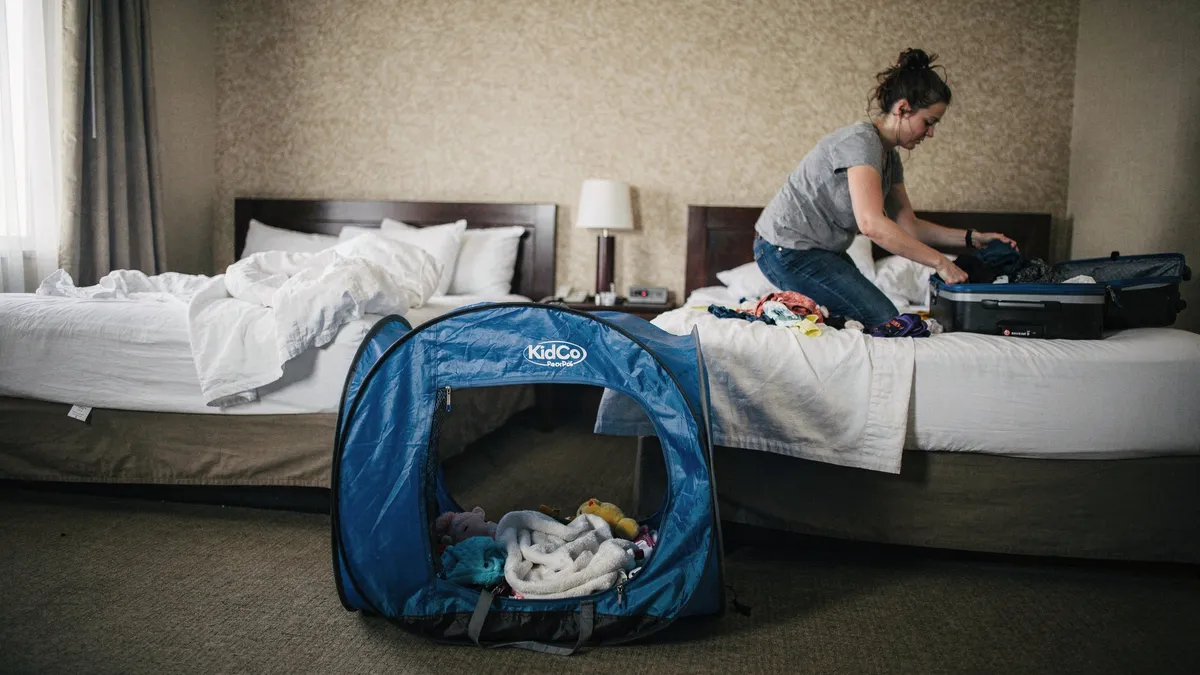
This is the anchor purchase, because naps happen wherever the baby is. The default answer for a grandparent house is a Graco Pack 'n Play, the folding playard that has been the sleepover standard for decades; basic models like the On the Go version regularly sell for under $100 as of mid-2026, fold into a closet between visits, and serve as both nap spot and contained play space once the baby is mobile. The honest limitation is bulk and fiddle: playards are heavier than they look, and the fold takes practice the first few times.
If the budget stretches and visits are frequent, the BabyBjorn Travel Crib Light is the premium version of the same idea: around $300 as of mid-2026, roughly 13 pounds, a genuinely one-minute setup, and a mattress that sits directly on the floor so there is no platform to misassemble. The limitation is the price, which is hard to justify for occasional visits, and the shallow carry bag that owners say takes an annoyingly precise fold.
Whichever bed you choose, set it up the way current guidance requires: a bare, firm sleep surface with a fitted sheet and nothing else in it. The American Academy of Pediatrics keeps a plain-language safe sleep guide that is worth ten minutes of any grandparent's time, because the rules changed a lot between 1985 and now: babies go down on their backs, and blankets, pillows, and stuffed animals stay out of the crib.
Buy: a high chair that costs less than lunch
The IKEA ANTILOP high chair is one of the great open secrets of baby gear: about $25 with the tray as of mid-2026, legs that pop off for flat storage between visits, and a one-piece plastic seat with no crevices, so cleanup is a rinse in the sink. Parents of multiple children buy these repeatedly. The honest limitation is that it is purely functional, with no recline, no padding, and no wheels, and a newborn is months away from needing it, so time this purchase for the solid-food stage rather than the birth announcement.
Buy: the boring safety kit
Before the baby crawls, the grandparent house needs the unglamorous $50 sweep: outlet covers, cabinet latches on anything holding cleaners or medications, a gate if there are stairs, and moving the houseplants and dangling cords up a shelf. Medications are the specific hazard grandparent homes add, since pill organizers are designed for easy opening. None of this photographs well, and it is the most genuinely protective spending on this page.
Buy, maybe: one sound machine
A white noise machine makes an unfamiliar house sound like naptime. Hatch's baby sound machines are the category standard at around $60 to $90 as of mid-2026, app-controlled with a gentle sunrise light for toddlers learning when morning starts. The honest caveats: app-controlled hardware is overkill for a house the baby visits monthly, a $20 basic machine does the acoustic job, and whichever you buy should sit across the room from the crib at a moderate volume.
Skip: crib bumpers, and older sleep gear generally
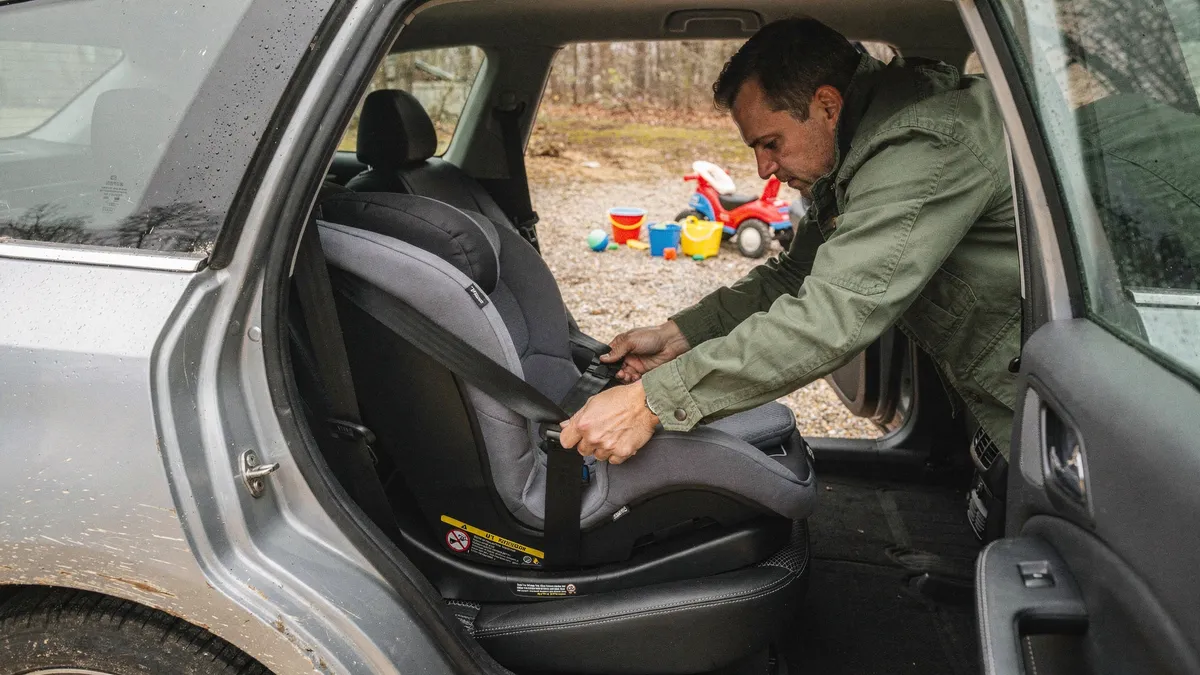
Padded crib bumpers are the rare baby product that is actually illegal to sell in the United States: the Safe Sleep for Babies Act banned them federally in 2022 because of suffocation risk. If a set survives in the attic from your own parenting years, it belongs in the trash rather than the nursery. The same skepticism applies to the heirloom crib itself, since older drop-side cribs were banned from sale back in 2011, and to any secondhand car seat without a known history. Car seats carry expiration dates, usually six to ten years from manufacture, and a seat that has been through a crash is done regardless of appearance. Gear is the wrong category for nostalgia.
Skip: the duplicate nursery
The most common grandparent overspend is recreating the parents' setup wholesale: a second full-size crib, a second stroller system, a changing table, a wipe warmer, a bottle sterilizer. A folding pad on a dresser changes diapers just fine, hot soapy water or a dishwasher handles bottle hygiene for most families, and wipe warmers are the canonical example of a product solving a problem babies do not have. The travel crib above plus a dedicated drawer of diapers, wipes, and two changes of clothes covers 95 percent of visits for a tenth of the cost.
Skip: newborn-size adorableness
Tiny shoes, stiff denim, anything with more than one button per second of dressing time: babies outgrow the newborn size in weeks, sometimes before wearing a given outfit once. If clothing is irresistible, buy it in the 12-month and 18-month sizes the child will grow into, one season ahead. Parents quietly appreciate this far more than a drawer of size-newborn keepsakes.
Buy: the quiet sleeper hits
Ask experienced grandparents what actually earned its keep and the same unglamorous items come up. A stack of board books, bought used for a dollar or two each, outlasts every electronic toy in the house and starts the reading-at-grandma's tradition early. A waterproof mattress protector for whatever bed the child eventually graduates into saves a 2 a.m. crisis. And a small storage bin of duplicate basics, diapers in the current size, wipes, diaper cream, a sleep sack, two pacifiers if the baby uses them, means the parents can arrive with nothing and stay for dinner on a whim. That last one changes visit frequency more than any single piece of equipment, because it removes the packing tax from every trip.
The one-paragraph version
Spend on where the baby sleeps, what the baby sits in to eat, and making the house safe to explore. Ask the parents before every purchase over $50. Distrust anything inherited that touches sleep or car travel. And remember that the resource grandparents actually have in surplus is attention, which requires no assembly and never expires.