The average American baby registry has somewhere north of a hundred items on it, and the average newborn uses about fifteen of them. The gap between those numbers is an industry. This guide is for the second number: the short list of gear a newborn genuinely requires, with specific products that have earned their reputations, honest prices as of mid-2026, and the equally important list of what can wait or be skipped entirely. Links go to manufacturer and pediatric organization pages, with no affiliate tracking anywhere.
The car seat, because the hospital checks
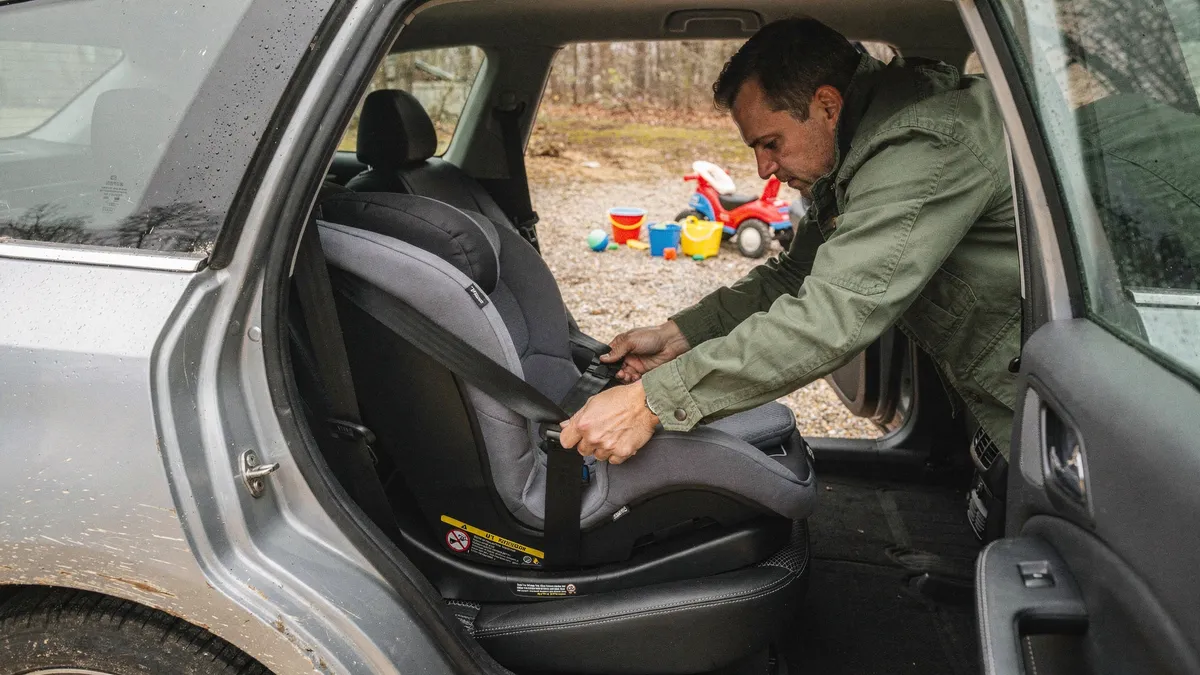
An infant car seat is the one purchase with a deadline, since most hospitals will not discharge a newborn without seeing one installed. The Chicco KeyFit 35 has spent years as the default recommendation because of the thing that matters most in practice: it is unusually hard to install incorrectly, with spring-loaded leveling feet, clear bubble indicators, and a base that clicks onto the LATCH anchors without wrestling. It costs around $230, fits babies from 4 to 35 pounds, and the carrier clicks in and out of the base one-handed. The honest limitation is bulk and lifespan: the carrier gets heavy fast as the baby grows, and like every infant seat it is outgrown within roughly the first year, at which point you are shopping again for a convertible seat. Whatever seat you choose, read its height and weight limits, register it with the manufacturer so recall notices reach you, and never buy one secondhand with unknown history.
A safe place to sleep, which is simpler than the catalog suggests
Sleep gear is where registries balloon, and where the guidance is actually the simplest. The American Academy of Pediatrics' advice, laid out in its parents' guide to safe sleep, comes down to a firm flat surface and a bare one: no blankets, pillows, bumpers, or stuffed animals in the sleep space. That standard is met just as well by a $90 setup as a $1,500 one.
The budget answer is the Graco Pack 'n Play, around $90 to $110 depending on configuration, which is a regulated play yard that doubles as a legitimate full-time bassinet and later a travel crib, and for many families it is the only sleep furniture the first year requires. Its honest limitation is that it is plain, the mattress pad is thin by design to meet firmness standards, and the fancier versions with changers and napper attachments add cost for parts you must stop using early anyway.
Because blankets are off the table, a wearable one does the warmth job. The HALO SleepSack, around $25 to $30, zips the baby into a sleeveless wearable blanket, and the swaddle version adds adjustable wings for the newborn weeks. Buy two, since one will always be in the wash. The honest note: babies must transition out of the swaddle style as soon as they show signs of rolling, so the swaddle versions have a service life measured in weeks, and the sizes turn over quickly enough that stocking up ahead is a gamble.
Feeding, without buying the whole aisle
Whether you are formula feeding, pumping, or combination feeding, bottles are unavoidable, and the practical advice from years of parent trial and error is to start small because babies veto bottles without explanation. Philips Avent Natural bottles, around $25 to $30 for a four-pack, are a sensible default: wide nipples many babies accept, few parts to wash, and replacement nipples sold everywhere. The honest limitation is that no bottle brand works for every baby, so buy one pack, not the gift set, until yours has voted. Add a basic bottle brush and a drying rack, and skip the dedicated bottle sterilizer machine at first, since a pot of boiling water or dishwasher cycles handle sanitizing per the bottle maker's instructions.
The unglamorous heroes
Diapers and wipes are the actual bulk of newborn care, roughly ten changes a day early on. Pampers Swaddlers is the hospital-standard disposable and a safe registry default at around 25 to 35 cents per newborn-size diaper in bulk boxes, but the honest advice is not brand loyalty, it is restraint: newborns outgrow the first size in weeks, sometimes days, so stock one box of newborn size and start on size one.
The Frida Baby NoseFrida, around $16, is the parent-powered nasal aspirator that sounds disgusting, has a filter that makes it hygienic in practice, and works dramatically better than the bulb syringe the hospital sends home. Babies cannot blow their noses, and a stuffed baby cannot eat or sleep, which makes this cheap tool earn its keep the first time a cold arrives. Its honest limitation is that most babies loudly hate the experience, and you will need saline drops alongside it to loosen anything first.
Round out the short list with the boring consumables: a digital rectal thermometer, since that is the type pediatric guidance calls for in early infancy, fragrance-free baby wash, a soft brush, nail files, and a tube of plain diaper rash cream. All of it together costs less than one designer diaper bag.
What you genuinely do not need yet
Wipe warmers, bottle warmers, changing tables, and shoe-like footwear for a person who cannot walk are the classic registry padding. Baby towels and washcloths duplicate the regular ones you own. Elaborate video monitors with sleep analytics can wait until you know whether your home and nerves even want one, and a plain audio or basic video monitor covers the newborn months in most homes. The theme is that a newborn's actual requirements are transport, sleep, food, hygiene, and warmth, and everything else is bought for the parents, which is fine, as long as you know that is who it is for.
The one-paragraph shopping list
If you want the whole article in a cart: Chicco KeyFit 35, a Graco Pack 'n Play, two HALO SleepSacks, one four-pack of Philips Avent Natural bottles with a brush and rack, one box each of newborn and size-one diapers with unscented wipes, a NoseFrida with saline, a rectal thermometer, and the small hygiene consumables. That is roughly $450 to $550 all in at mid-2026 prices, it fits in one closet, and it covers the first weeks of a newborn's life with room to add gear later once the baby tells you what this particular household is missing.