The distance between "there's nothing to eat" and a real dinner is usually about a dozen unglamorous items. A stocked pantry is not a hundred jars; it is a short list of workhorses, a few flavor multipliers, and one or two places where paying extra genuinely changes the food. This guide names names, with prices as of mid-2026 and the honest catch for each, sorted into those three tiers.
Tier one: the workhorses
Kosher salt, and specifically Diamond Crystal
If one brand recommendation in this article matters, it is this one. Diamond Crystal kosher salt has hollow, pyramid-shaped crystals that crush between your fingers and dissolve fast, which makes it far more forgiving than dense table salt or even other kosher brands; oversalting takes real effort. It is the near-universal choice in professional kitchens, and a 3-pound box costs around $9 to $11 as of mid-2026 and lasts a home cook the better part of a year. The catch: many supermarkets stock only the competing brand, whose finer, denser grains are roughly twice as salty by volume, so recipes written for Diamond Crystal will oversalt if you swap without adjusting. If you switch brands, halve the amounts and taste.
Two oils
You need a neutral oil with a high smoke point for searing and frying, where canola, vegetable, or avocado oil all serve, and a decent extra-virgin olive oil for dressings and finishing. The honest advice on olive oil is to buy a mid-shelf bottle, around $12 to $18 for a 500ml bottle in 2026, check for a harvest date on the label, and store it away from the stove's heat. The $40 boutique bottle is a pleasure, and it is wasted the moment it hits a hot pan.
Flour, rice, and dried pasta
For flour, King Arthur Baking all-purpose is the reliable pick: its protein content is unusually consistent bag to bag, which is why baking recipes behave predictably with it. It costs a dollar or two more than store brands, roughly $5 to $7 for five pounds as of mid-2026, and that consistency is the entire argument; if you rarely bake, the store brand is honestly fine. Alongside it, keep one everyday rice you actually cook well, jasmine covers the most ground, and two shapes of dried pasta, one long and one short. Skip the fifteen specialty shapes until the first two run out regularly.
Canned tomatoes, beans, and eggs
Whole peeled tomatoes are the most flexible canned form, crushable by hand into sauce or left chunky. Imported San Marzano cans carry a premium and a long history of label games; a good domestic plum tomato at $2 to $3 a can embarrasses no one's Sunday sauce. Canned chickpeas and black beans buy you dinners on the worst nights. Eggs are technically not pantry, and no staples list is honest without them; they are the fastest protein in the house.
Tier two: the flavor multipliers
These are the items that make pantry cooking taste deliberate instead of desperate.
Better Than Bouillon
Boxed stock is mostly water you paid to ship. Better Than Bouillon is a concentrated paste, a spoonful per cup of water, and a jar of the Roasted Chicken base costs around $7 to $9 as of mid-2026 while replacing about ten boxes of stock and occupying one shelf slot in the fridge after opening. It transforms weeknight soups, pan sauces, and pots of beans. The honest limitation is sodium: it is salty by design, so salt the dish only after the bouillon is in, and taste before you add more.
The acid shelf
Most home cooking that tastes flat is missing acid, and the fix costs under $15 total: rice vinegar for anything remotely Asian-leaning and for quick-pickling onions, red wine vinegar for vinaigrettes and pan sauces, and fresh lemons on a standing grocery rotation. When a finished dish tastes dull, try a half teaspoon of vinegar before you reach for more salt; it works startlingly often.
The umami bench
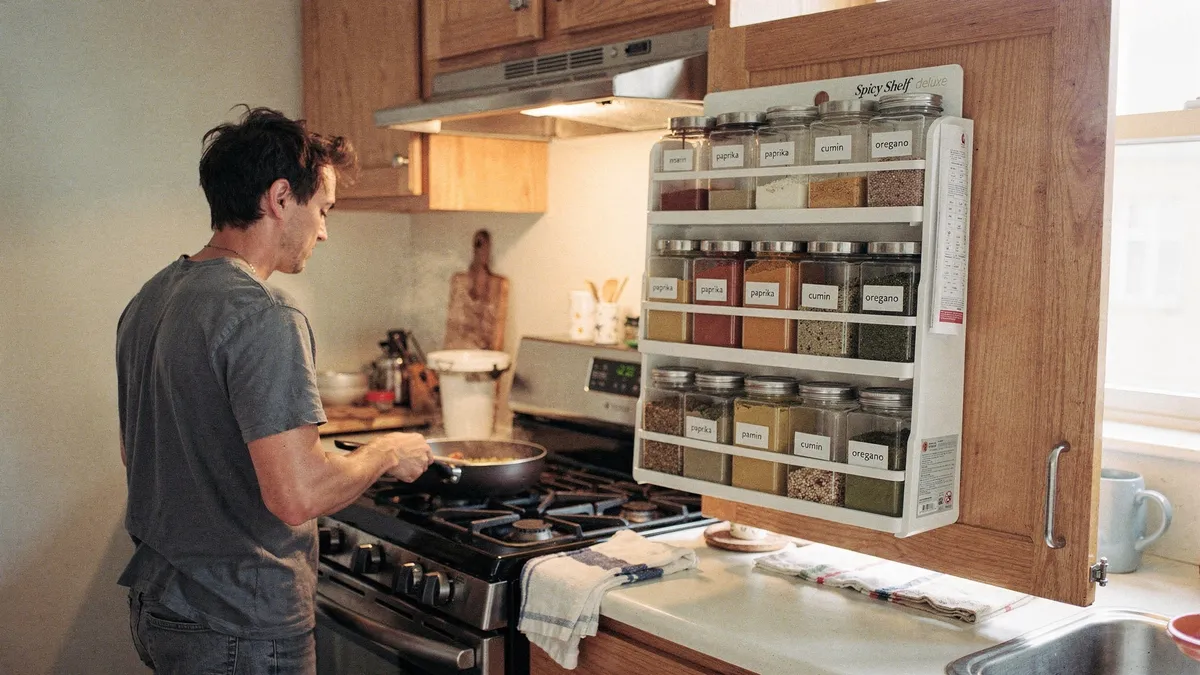
Soy sauce, fish sauce, anchovies, and tomato paste all do versions of the same job: adding savory depth that reads as "cooked for hours." Fish sauce and anchovies scare people and disappear completely into dressings, braises, and pasta sauces, leaving only depth behind. A tube of tomato paste, rather than the can you always waste, keeps for months in the fridge. Add chili crisp if your household likes heat; on eggs, rice, or dumplings it is the highest-return jar in the modern pantry.
Tier three: where upgrading is actually worth it
Rancho Gordo beans
Most dried supermarket beans are years old and cook unevenly forever. Rancho Gordo, a California grower devoted to heirloom varieties, sells beans fresh enough that they cook in a fraction of the time and hold their shape in a broth that becomes its own reward. A one-pound bag runs about $7 to $8 as of mid-2026, five times the price of the dusty bag on the bottom shelf, and a pot of their Royal Coronas makes the case better than any paragraph can. The limitations are the price itself and availability, since popular varieties genuinely sell out; this is the treat tier, with the $1.50 bag remaining the budget backbone.
Real Parmigiano-Reggiano
The pre-grated canister and the real wedge are different foods. A wedge of Parmigiano-Reggiano costs $20 to $25 a pound as of mid-2026, keeps for weeks wrapped in the fridge, and the rind goes into your next pot of soup or beans, so nothing is wasted. The limitation is purely the upfront price per grocery trip; per meal, the math is kinder than it looks.
Keeping it alive
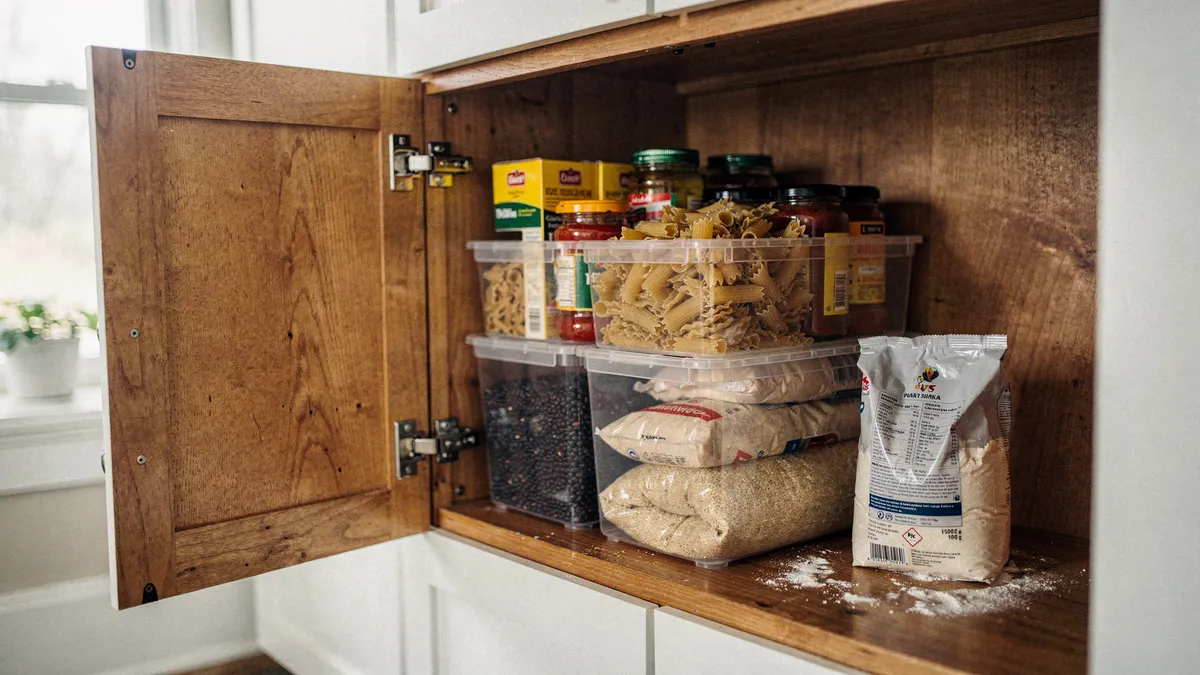
A pantry is a system, and systems decay quietly. Three habits keep this one working. Store flours, grains, and anything a moth might love in sealed containers, because one pantry-moth episode will radicalize you. Put new purchases behind old ones so the old stock gets used first. And once a season, cook a week deliberately from the pantry before restocking; it surfaces the jar you bought twice, the vinegar you never use, and the gap you keep working around. The goal was never a full cupboard. It is that Tuesday night, staring into the kitchen, and finding that dinner is already there.