Many people move into their first home and stare at a bare patch of yard with no idea where to start. The tool section at any hardware store has dozens of options. This article cuts that list down to what actually matters first.
The Core Garden Tools for Beginner Homeowners
A beginner doesn't need a shed full of equipment. The University of Illinois Extension, which publishes widely-used home gardening guidance, recommends starting with five core hand tools: a round-point shovel - a garden hoe, a hand trowel, a garden rake, and a watering can or garden hose with an adjustable nozzle. That short list covers digging, weeding - planting, soil leveling, and watering - the five basic tasks every new gardener actually does in year one.
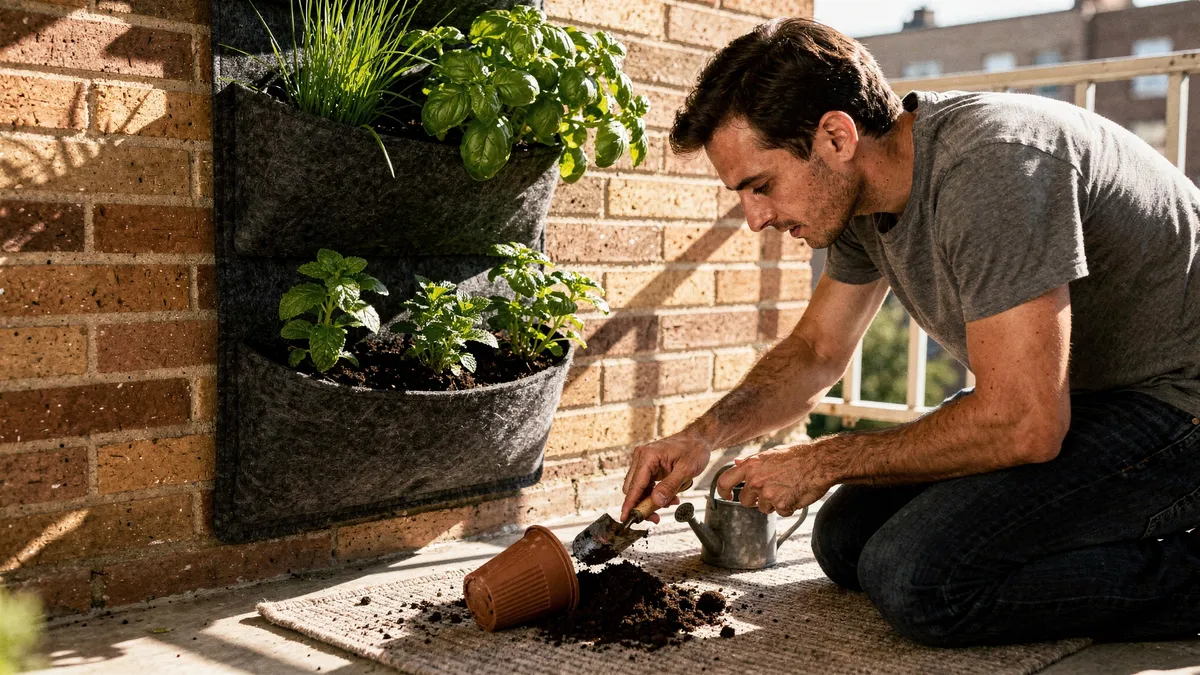
A round-point shovel digs planting holes and turns soil. A garden hoe breaks up crusted soil and cuts weeds at the root. A hand trowel handles smaller planting jobs in tight spaces. A garden rake levels soil and moves debris. Everything else - cultivators, edgers, kneelers - bulb planters - comes later, once you know which tasks come up repeatedly in your specific yard.
How Each Tool Actually Does Its Job
The shovel works by leverage. The pointed tip breaks the soil surface, then the curved blade lifts and turns a full scoop. A flat-edged spade, which many beginners confuse with a shovel, is designed for edging beds and cutting straight lines - not for general digging. Buying a flat spade first is a common mistake.
The garden hoe works by slicing just below the soil surface - severing weed roots without deeply disturbing the soil. Dragging it rather than chopping it's more efficient and causes less soil disruption. The hand trowel is essentially a miniature version of the shovel and is used for transplanting seedlings, setting bulbs, and digging in containers.
The garden rake isn't the same as a leaf rake. A garden rake has short, stiff metal tines and is used to break up clods and level a seedbed. A leaf rake has long, flexible fan-shaped tines and is used to gather debris. Beginners need both eventually - but the garden rake comes first if any planting is planned. The leaf rake can wait until fall.
What This Starter Kit Actually Costs
Tool quality falls into three price tiers. Budget tools from large hardware retailers run roughly $8 to $18 per piece. Mid-range tools with solid ash or fiberglass handles run $20 to $45 per piece. Professional or contractor-grade tools - forged steel heads, hardwood handles - run $50 to $90 or more per piece. For a beginner buying the five-tool starter set described above, the budget-range minimums in the list below add up to $69, so expect a total from about $70 at the low end to $200 at the mid-range.
The Cooperative Extension System - a network of land-grant university programs operating in all 50 states - advises that mid-range quality is the right level for most homeowners. Budget tools often have welded connections that fail within one or two seasons of regular use, meaning the cheaper option costs more over five years.
Common Questions After the First Purchase
Do hand tools need maintenance? Yes. Metal blades rust if stored on the ground or left wet. Wiping blades with an oily rag after each use and hanging tools vertically in a dry shed or garage extends tool life by years. The National Gardening Association recommends linseed oil for wooden handles - apply it once per season to prevent cracking and splintering.
When does a beginner need power tools? A gas or electric tiller becomes useful when preparing a new garden bed larger than roughly 100 square feet from scratch. For smaller areas, hand tools are faster and cheaper. The U.S. Consumer Product Safety Commission reports that tillers and power cultivators are involved in thousands of emergency-room visits annually - so beginners should read all operating instructions before first use and wear closed-toe shoes.
What about pruning tools? Bypass hand pruners are worth adding immediately if any shrubs or small trees are on the property. A bypass pruner uses two curved blades that pass each other like scissors, making a cleaner cut than anvil-style pruners, which can crush stems and introduce disease. Expect to spend $18 to $35 for a reliable pair.
Real Risks and Honest Limits to Know
Tools cause real injuries. The U.S. Consumer Product Safety Commission tracks non-power garden tool injuries in the United States at roughly 60,000 emergency department visits per year. The most common causes are slipping on a wet tool blade, stepping on an upturned rake - and back strain from improper lifting technique. Bend at the knees when lifting a loaded shovel. Store tools with blades facing the wall, not outward.
Soil type also limits what hand tools can accomplish. Clay-heavy soils can make hand digging extremely difficult and may require renting a power tiller for initial bed preparation. The USDA Natural Resources Conservation Service maintains Web Soil Survey, a free online tool that shows soil composition by address - checking it before buying tells you whether hand tools are realistic for your property or whether a rental is the smarter first investment.
Tool handles also have weight and length limits that affect comfort. A handle that's too short forces a curved spine; a handle that's too long reduces control. Most full-size tools are designed for users roughly 5 feet 6 inches to 6 feet tall. Shorter or taller users should look for tools labeled with specific handle lengths or visit a store to test reach before buying online.
Where People Slip Up
Buying too many tools at once. The hardware store layout encourages grabbing everything in one trip. Most beginners buy eight to ten tools, use three, and let the rest corrode in a corner. Start with the five-tool list. Add a specific tool only when a specific task comes up repeatedly that those five can't handle.
Treating all rakes as interchangeable. As noted above - a leaf rake and a garden rake are different tools with different purposes. Using a flexible leaf rake to level a seedbed tears the tines. Using a rigid garden rake to gather leaves is slow and inefficient. Knowing which is which before the store visit saves a wasted trip.
Skipping handle quality to save money. The handle is the tool's failure point, not the blade. Budget tools often use low-grade hardwood or thin fiberglass that splits or flexes under load. Paying $10 to $15 more per tool for a solid ash or thick fiberglass handle is the single most cost-effective upgrade a beginner can make. The metal blade of a good shovel can outlast two or three cheap handles.
Storing tools flat on a garage floor. Flat storage invites rust, causes handles to absorb moisture unevenly, and creates a tripping hazard. A simple wall-mounted rack or a large bucket of sand with a splash of mineral oil - a classic storage method recommended by many Cooperative Extension publications - keeps blades sharp, handles dry - and the floor clear.
For specific advice about soil conditions, local climate, or which tool types work best in a particular region, speak with a Cooperative Extension agent in the local county. Extension offices are free public resources staffed by horticulture specialists, and most counties offer both in-person and phone consultations for home gardeners.
Disclaimer
This article is for general informational purposes only and doesn't constitute professional - financial, medical, or legal advice. Consult a qualified professional about your specific situation.